If you’re looking affordable private services in Saudi Arabia, contact Now for Umrah Taxi service.
Shuhada Uhud Cemetery Guide: History, Location, and Visiting the Martyrs of Uhud in Madinah


February 6, 2026
If you’re looking affordable private services in Saudi Arabia, contact Now for Umrah Taxi service.
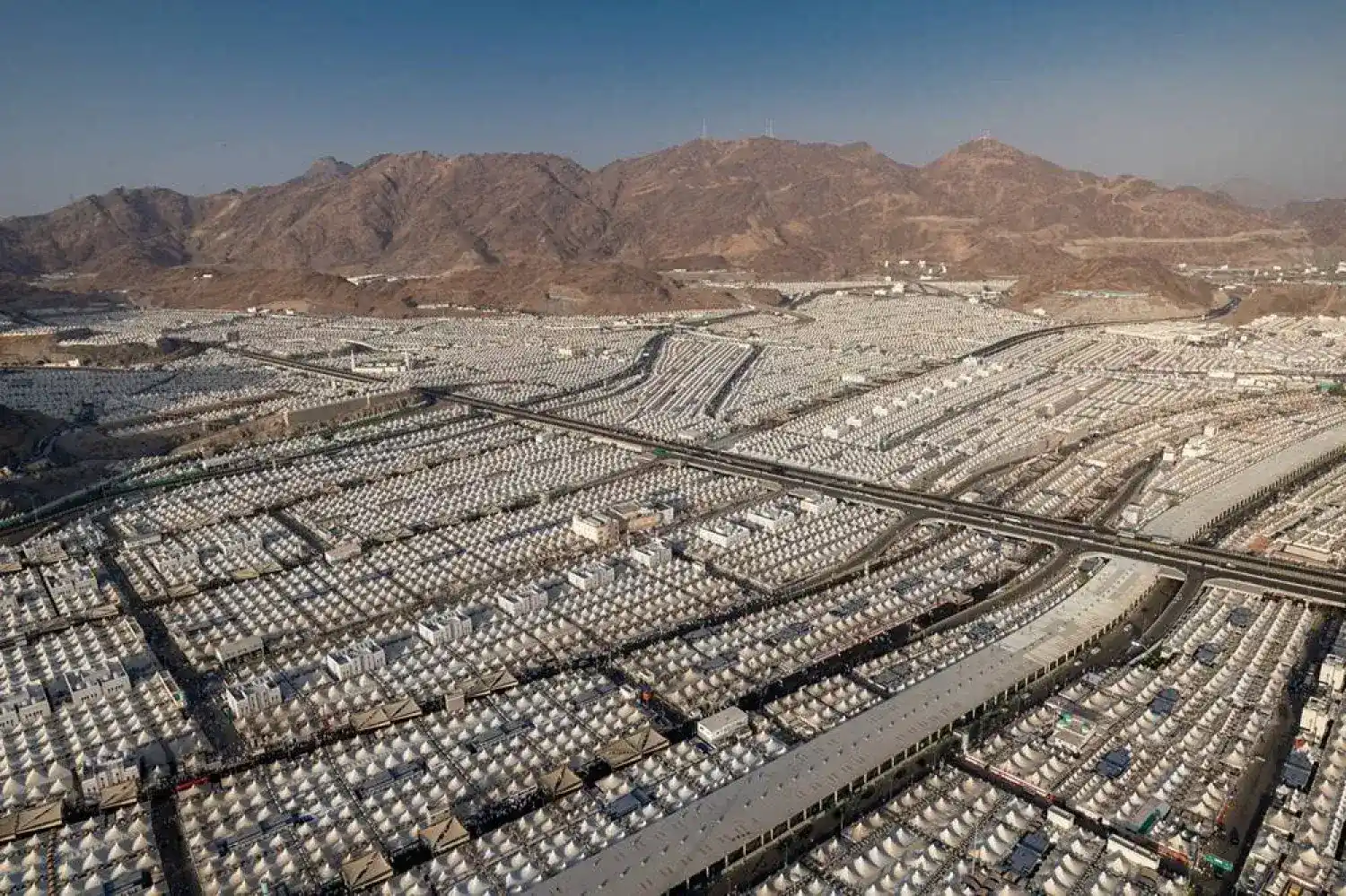
Mina is one of the most spiritually significant locations in Islam and a core pillar of the Hajj pilgrimage. Situated a few kilometers east of Masjid al-Haram, Mina transforms every year into a vast sacred settlement where millions of pilgrims gather to perform some of the most profound rituals of their lives. Known worldwide as the City of Tents, Mina is not merely a place to stay-it is a living space of worship, remembrance, sacrifice, and reflection.
For pilgrims arriving in Makkah for Hajj, understanding Mina’s role, layout, and rituals is essential for both spiritual fulfillment and practical preparation.
Mina lies approximately 6 to 8 kilometers east of Masjid al-Haram, nestled within a narrow valley between Makkah and Muzdalifah. It forms part of the sacred Masha‘er area that also includes Arafat and Muzdalifah. Despite its proximity to the holy mosque, Mina remains largely uninhabited outside the Hajj period, coming alive only during the specific days of Dhul Hijjah.
Because of its location, pilgrims usually travel to Mina directly from Makkah on the 8th of Dhul Hijjah and later move between Mina, Arafat, and Muzdalifah as part of the Hajj sequence.
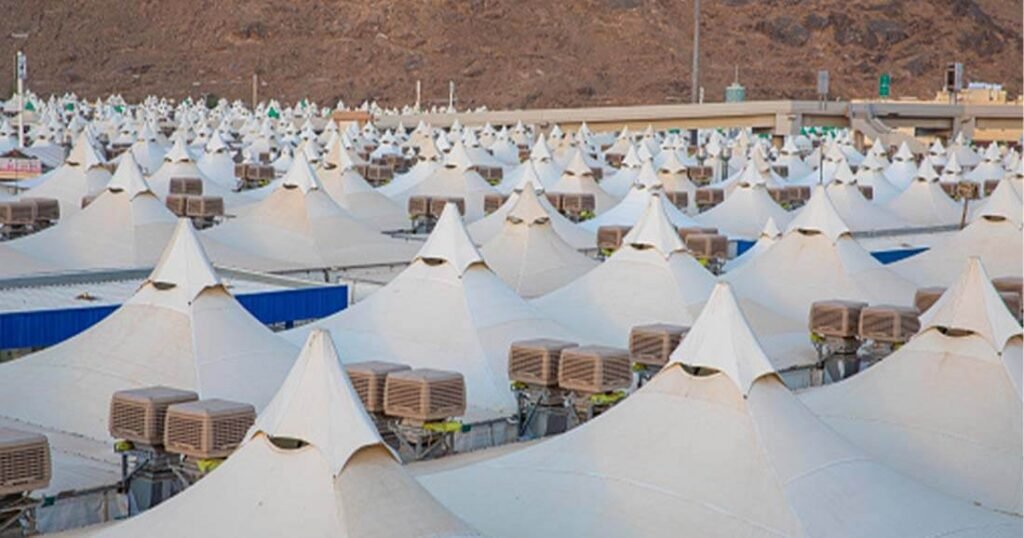
Mina earned the title “City of Tents” due to its unique infrastructure. More than 100,000 permanent, air-conditioned, fire-resistant tents are installed across the valley, forming the largest tent city in the world. These tents are designed to safely accommodate up to 3 million pilgrims at a time.
Each tent camp is organized by Hajj groups and nationalities, marked with clear color and number codes to help pilgrims navigate the area. Modern Mina camps include electricity, lighting, sanitation facilities, kitchens, medical points, and pedestrian pathways connecting all major areas, including the Jamarat complex.
Mina’s importance is deeply rooted in the story of Prophet Ibrahim (peace be upon him). It is here that Ibrahim (AS) was tested by Allah with the command to sacrifice his son, Isma‘il (AS). When Shaytan attempted to dissuade him, Ibrahim (AS) rejected the temptation by throwing stones-an act commemorated today through the ritual of Rami al-Jamarat.
This test of faith, obedience, and submission lies at the heart of Mina’s spiritual meaning.
Mina is referenced in the Qur’an in Surah Al-Baqarah (2:203), which speaks of remembering Allah during the “numbered days,” a direct reference to the Days of Tashreeq spent in Mina. Historically, Mina also witnessed significant moments in early Islam, including pledges made to the Prophet Muhammad ﷺ that later shaped the foundation of the Muslim community in Madinah.
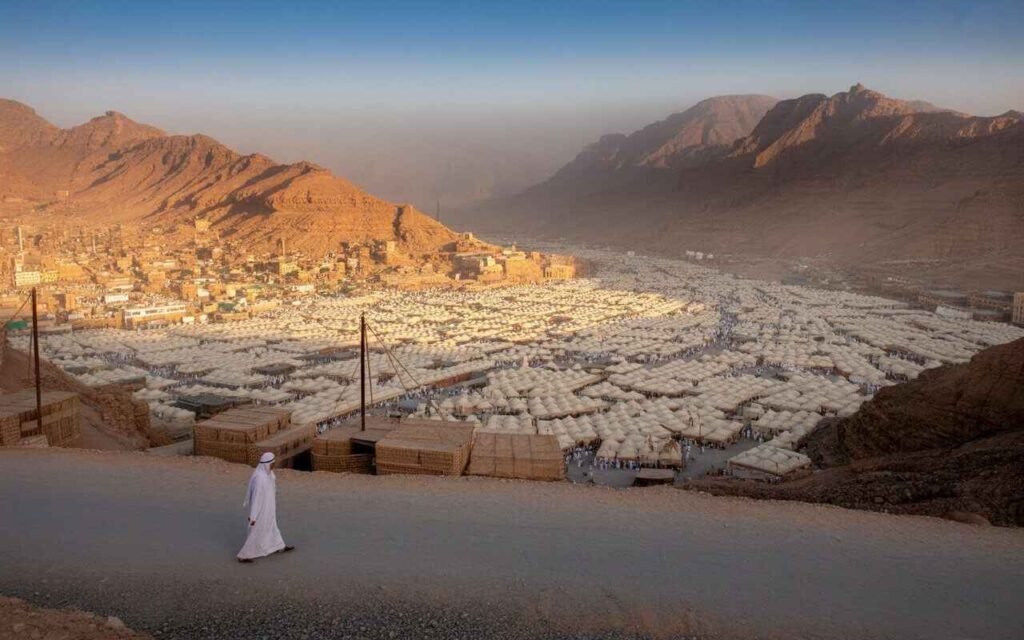
Hajj officially begins for many pilgrims on the Day of Tarwiyah, when they enter Mina in a state of ihram. Pilgrims spend the day and night in prayer, recitation, and preparation before moving on to Arafat. This overnight stay (mabit) is a sunnah practice that sets the spiritual tone for the days ahead.
After standing at Arafat and spending the night in Muzdalifah, pilgrims return to Mina on the 10th of Dhul Hijjah. This marks the beginning of Eid al-Adha and the continuation of essential Hajj rites.
From the 11th to the 13th of Dhul Hijjah, pilgrims remain in Mina to perform the stoning ritual at the Jamarat. Depending on their Hajj plan, some pilgrims leave Mina after two days, while others stay for the full three days.
The Jamarat complex in Mina contains three stone structures representing the rejection of evil:
Pilgrims throw pebbles at these Jamarat at specified times, symbolizing resistance against temptation and reaffirming obedience to Allah. The modern multi-level Jamarat bridge allows safe and controlled movement for millions of pilgrims each day.
Recommended: Masjid e Quba
Mina tents are designed for collective living and worship. While simple, they provide essential comfort in a challenging environment. Each camp includes access to toilets, ablution areas, food distribution points, and medical services. Masjid al-Khayf, located within Mina, is a significant mosque where many prophets are believed to have prayed and remains active during Hajj.
Upon arrival, pilgrims should immediately note their tent number and group code, as tents look similar. Walking routes to toilets and the Jamarat area should be learned early, preferably during daylight. Staying hydrated, resting adequately, and avoiding peak heat hours are essential for health and safety.
Outside the days of Hajj, Mina is generally closed for accommodation and remains quiet. However, pilgrims visiting Makkah for Umrah often pass by Mina during Ziyarat tours, where they can learn about its significance without entering restricted areas.
Efficient transportation plays a critical role during Hajj and Ziyarat visits. Many pilgrims rely on organized group transport, metro services, or private vehicles to move between Makkah, Mina, Arafat, and Muzdalifah.
For pilgrims and visitors seeking comfort, reliability, and clear scheduling, licensed private taxi services are especially helpful. Services such as Jeddah to Makkah taxi, Makkah Ziyarat taxi, and Madinah Ziyarat taxi allow travelers to reach Mina and other holy sites smoothly, particularly outside peak congestion hours. For families and groups, vehicles like Toyota Hiace, Coaster, and buses offer practical solutions for group transportation between cities and religious landmarks.
Mina represents more than physical movement-it symbolizes inner struggle, patience, and submission. The days spent here remind pilgrims that faith is tested through action, sacrifice, and remembrance. The simplicity of life in Mina strips away worldly distractions, allowing the heart to reconnect with its purpose.
Recommended: Jabal al Nour
Mina stands as one of the most powerful symbols of Hajj, combining history, worship, and collective devotion in a single sacred valley. From the City of Tents to the Jamarat, every part of Mina reflects the legacy of Prophet Ibrahim (AS) and the timeless values of faith and obedience. Whether you are preparing for Hajj or visiting Makkah for Umrah and Ziyarat, understanding Mina deepens both spiritual awareness and practical readiness.
Recommended Our Private Taxi Service
What is Mina in Hajj?
Mina is a sacred valley near Makkah where pilgrims stay and perform key Hajj rituals, including the stoning of the Jamarat.
Why do pilgrims stay overnight in Mina?
The overnight stay in Mina follows the sunnah of the Prophet ﷺ and prepares pilgrims spiritually for Arafat and the remaining Hajj rites.
How far is Mina from Masjid al-Haram?
Mina is approximately 6 to 8 kilometers east of Masjid al-Haram.
Can Mina be visited during Umrah?
While accommodation is restricted outside Hajj, Mina can be viewed during guided Ziyarat tours.
What is the best way to travel to Mina?
Pilgrims commonly use organized Hajj transport, metro services, or licensed private taxis, especially for group or intercity travel.