If you’re looking affordable private services in Saudi Arabia, contact Now for Umrah Taxi service.
Shuhada Uhud Cemetery Guide: History, Location, and Visiting the Martyrs of Uhud in Madinah


February 7, 2026
If you’re looking affordable private services in Saudi Arabia, contact Now for Umrah Taxi service.
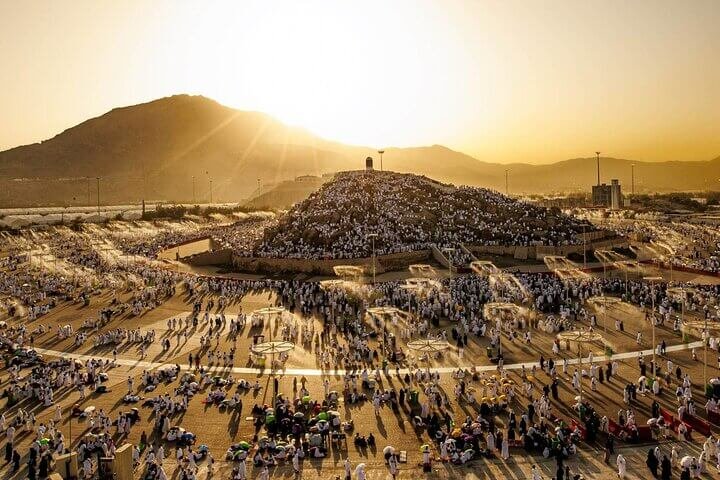
Mount Arafat, known in Arabic as Jabal Arafat and also called Jabal al-Rahmah (the Mountain of Mercy), stands at the very center of the Hajj pilgrimage. Located on the Plain of Arafat, approximately 20 kilometers southeast of Makkah, this modest granite hill holds immense spiritual weight in Islam. Despite its physical height of only around 70 meters, Mount Arafat represents the highest point of meaning in the Hajj journey, where repentance, humility, and divine mercy converge.
For pilgrims performing Hajj and visitors arriving for Ziyarat during Umrah, Mount Arafat is not simply a historical site. It is a living symbol of faith, accountability, and renewal that continues to shape the spiritual experience of millions every year.
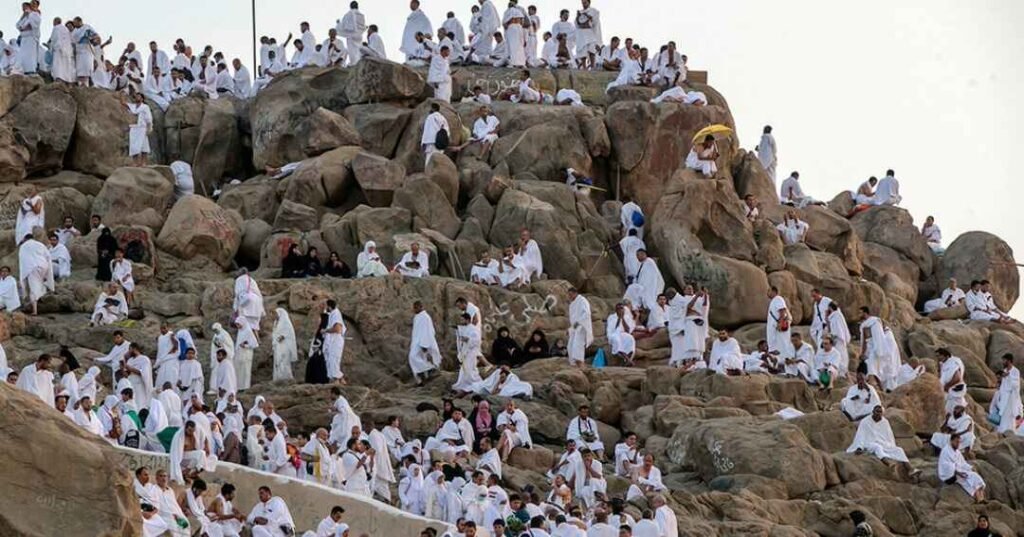
Mount Arafat is a small granodiorite hill rising from a vast open area known as the Plain of Arafat, situated along the route between Makkah and Taif. In Islamic terminology, the name Arafat refers to the entire plain, not only the hill itself. The mountain is commonly called Jabal al-Rahmah because of its strong association with Allah’s mercy, forgiveness, and acceptance of supplication.
Linguistically, the root of the word “Arafat” is linked to knowing and recognition, reflecting the spiritual awareness and self-realization that pilgrims seek on this sacred land.
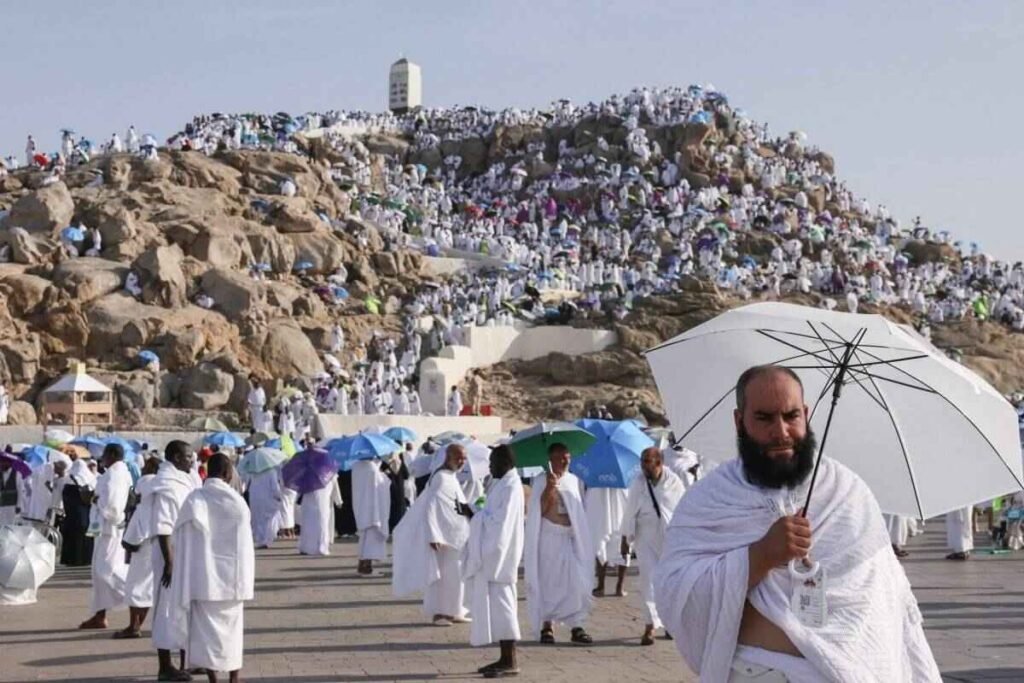
Mount Arafat and its surrounding plain are inseparable from the validity of Hajj. The Prophet Muhammad ﷺ clearly stated that standing at Arafat is the essence of Hajj, meaning that without being present in Arafat during the prescribed time on the 9th of Dhul-Hijjah, the pilgrimage is invalid regardless of other rituals performed. This makes Arafat unique among all sacred sites in Islam.
One of the most defining moments in Islamic history took place in this area when the Prophet Muhammad ﷺ delivered his Farewell Sermon during his final pilgrimage. This sermon laid down universal principles of justice, equality, human dignity, and accountability before Allah. Its message continues to resonate globally, reinforcing Mount Arafat’s role as a place of guidance and moral clarity.
Islamic tradition holds that Prophet Adam and Hawwa (Eve) were reunited and forgiven by Allah at this location after their descent to Earth. This association reinforces Mount Arafat’s identity as a place of reconciliation, mercy, and hope, where sincere repentance is especially meaningful.
Wuquf, meaning “standing,” refers to remaining within the boundaries of Arafat from noon until sunset on the 9th of Dhul-Hijjah. During this time, pilgrims dedicate themselves entirely to du‘a, remembrance of Allah, and reflection. Physical standing is not mandatory; what matters is presence within Arafat and sincere engagement in worship.
For Muslims who are not performing Hajj, the Day of Arafah is also highly virtuous. Fasting on this day is widely observed and is associated with spiritual purification and forgiveness.
Pilgrims travel from Mina to Arafat in the morning, settle across the plain, and listen to the sermon delivered from Masjid al-Namirah. Dhuhr and Asr prayers are combined and shortened, after which pilgrims remain engaged in supplication until sunset. At dusk, they depart for Muzdalifah, marking a major transition in the Hajj itinerary.
Recommended: Jabal al Nour
At the summit of Mount Arafat stands a white stone pillar, historically used as a marker rather than a ritual focus. While many visitors climb the hill, Islamic scholars consistently clarify that climbing is not an act of worship. The virtue lies in du‘a and humility, not elevation.
Located at the edge of the Arafat boundary, Masjid al-Namirah is where the Hajj sermon is delivered and where pilgrims pray on the Day of Arafah. It plays a central educational and spiritual role during Hajj.
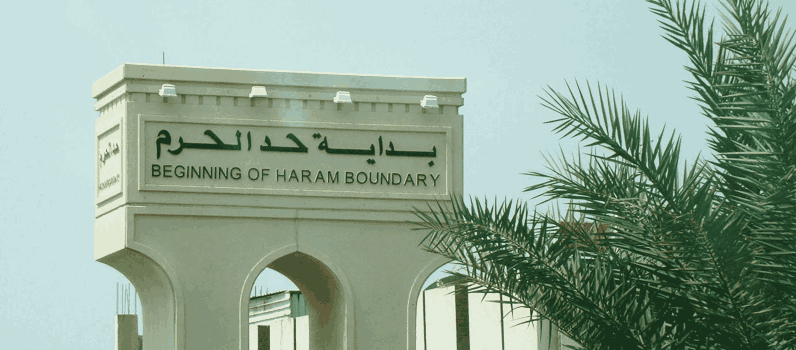
Wadi Urana lies adjacent to Arafat but is outside its boundaries. Standing in this valley during Hajj does not fulfill the Wuquf requirement, making boundary awareness critically important.
Outside the Hajj season, Mount Arafat remains accessible for visitors performing Umrah or general Ziyarat. The area is calm and open, allowing for reflection without the intensity of Hajj crowds. Early mornings are generally more comfortable due to the desert climate.
Modest dress, hydration, and respectful behavior are essential. Visitors are encouraged to focus on remembrance and supplication rather than sightseeing alone.
Climbing the hill is optional and not religiously required. Many visitors choose to remain on the plain, following the prophetic example of focusing on du‘a rather than physical ascent.
Reaching Mount Arafat outside Hajj is straightforward by road. Visitors often travel from Makkah as part of a Ziyarat route that may include Mina and Muzdalifah. For those arriving from Jeddah, a direct Jeddah to Makkah taxi followed by a planned Ziyarat visit offers flexibility and comfort, especially for families and elderly pilgrims.
Private transportation is particularly helpful for structured visits, allowing adequate time at each sacred site without rushing. Groups commonly prefer Hiace, Coaster, or Bus options, which are well-suited for Umrah groups and educational Ziyarat tours. The ability to travel at one’s own pace adds meaningful value to the spiritual experience.
Mount Arafat is a place of inner humility. Pilgrims and visitors alike are encouraged to arrive with sincerity, focusing on personal accountability, forgiveness, and renewal of faith. The simplicity of the landscape mirrors the essence of the moment: complete dependence on Allah and hope in His mercy.
Mount Arafat stands at the core of Islamic spirituality, not because of its size, but because of what it represents. It is the place where Hajj reaches its meaning, where forgiveness is sought collectively, and where humanity stands equal before Allah. Whether experienced during Hajj or visited during Umrah as part of a Ziyarat journey, Mount Arafat remains a timeless reminder of mercy, purpose, and spiritual return.
Recommended Our Private Taxi Service
Is Mount Arafat the same as Jabal al-Rahmah?
Yes, Jabal al-Rahmah is the hill located within the Plain of Arafat and is commonly referred to as Mount Arafat.
Is climbing Mount Arafat required during Hajj?
No, climbing the hill is not required. Being anywhere within the boundaries of Arafat during the specified time fulfills the Wuquf requirement.
Can Mount Arafat be visited during Umrah?
Yes, Mount Arafat can be visited year-round and is commonly included in Makkah Ziyarat itineraries.
How far is Mount Arafat from Makkah?
It is approximately 20 kilometers southeast of Makkah and typically takes 20–30 minutes by road.
What is the best way to visit Mount Arafat with family or a group?
Private transportation, especially larger vehicles like Hiace or Coaster, offers comfort, flexibility, and ease for group visits.