
Madinah City Guide: History, Sacred Sites, Neighborhoods & Travel Insights
Madinah, officially known as Al-Madinah al-Munawwarah, holds a unique place in Islamic history as the second-holiest city in Islam. Located in western Saudi Arabia, it is the city that welcomed the Prophet Muhammad ﷺ after the Hijrah from Makkah in 622 CE, marking the beginning of the first Islamic society.
Beyond its religious status, Madinah city functions today as the administrative center of the Madinah Province and a living city where spiritual heritage and modern urban life exist side by side.
Names and Meaning of Madinah
Before Islam, the city was known as Yathrib, a name later discouraged after the Prophet ﷺ renamed it Taybah and Tabah, meaning purity and goodness. Over time, the name Al-Madinah an-Nabawiyyah-the City of the Prophet-became dominant, reflecting its spiritual role rather than just geographic identity.
Madinah’s Role in Islamic Civilization
Madinah is often described as the cradle of Islamic civilization. It was here that the early Muslim community was organized, major Quranic revelations were received, and foundational principles of Islamic governance and social life were established.
Geographic Layout and Urban Structure of Madinah
Madinah city covers a vast area, combining dense urban zones with mountains, valleys, agricultural land, and volcanic formations typical of the Hejaz region.
Central Haram Area
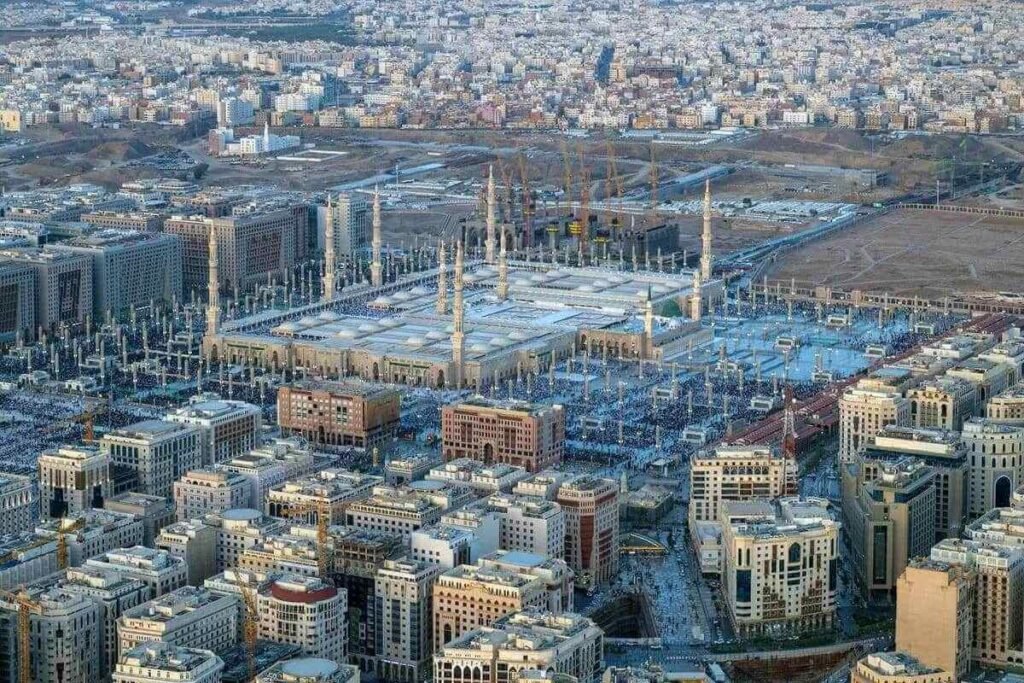
The heart of the city is the Haram area surrounding Al-Masjid an-Nabawi. This zone is highly regulated, pedestrian-friendly, and filled with hotels, services, and facilities designed to support pilgrims. Access to this sacred core is reserved for Muslims.
Residential and Expanding Districts
Beyond the central area, Madinah expands into residential neighborhoods that house local families, students, and long-term residents. These districts connect the historic city to modern developments, industrial zones, and educational institutions.
Key Religious and Historical Landmarks in Madinah City
Al-Masjid an-Nabawi
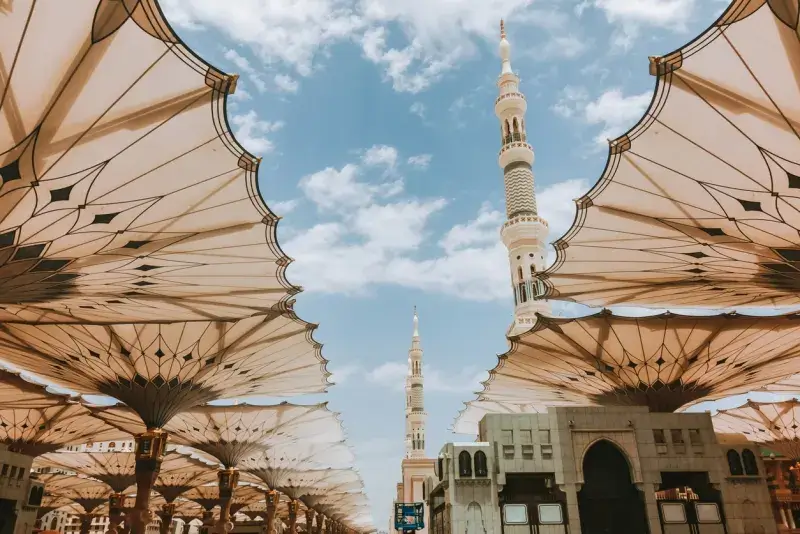
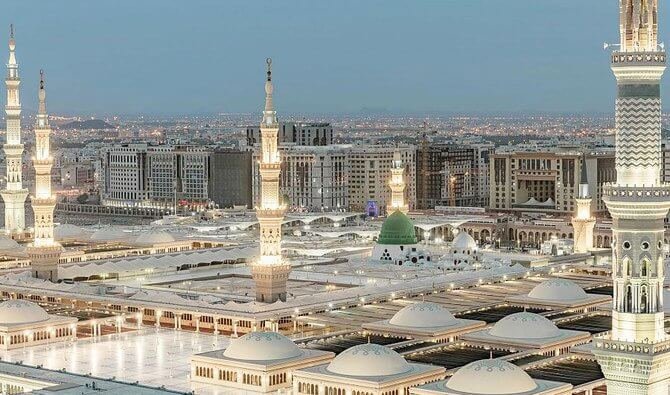
The Prophet’s Mosque is the spiritual nucleus of Madinah city. It houses the Rawdah and the resting place of the Prophet Muhammad ﷺ, along with the first two caliphs. Visiting this mosque for prayer and reflection is central to any Madinah journey.
Quba Mosque and Masjid al-Qiblatain
Quba Mosque is recognized as the first mosque built in Islamic history. Nearby, Masjid al-Qiblatain marks the moment when the direction of prayer was changed from Jerusalem to Makkah.
Mount Uhud and Jannat al-Baqi
Mount Uhud stands as a reminder of sacrifice and resilience, while Jannat al-Baqi is the resting place of many companions and family members of the Prophet ﷺ.
Madinah Ziyarat Areas and Visitor Movement
Ziyarat in Madinah city typically follows a structured route connecting major historical sites. Pilgrims often visit Quba Mosque, Uhud, Masjid al-Qiblatain, and Al-Baqi in a single journey.
For visitors, especially families and elderly pilgrims, moving between these locations comfortably is essential. Many travelers prefer private Madinah Ziyarat taxi services that allow flexible timing, knowledgeable drivers, and direct access without overcrowding.
Culture, Climate, and Daily Life in Madinah
Madinah experiences a hot desert climate, with summer temperatures often exceeding 40°C. Winter months are milder and are generally considered the most comfortable time to visit.
Daily life in Madinah reflects deep respect for Islamic values. Modest dress, polite behavior, and awareness of prayer times are part of the city’s rhythm, making the experience spiritually enriching rather than purely touristic.
Economy, Education, and Modern Development
While pilgrimage remains central, Madinah city also thrives through agriculture-particularly the cultivation of Ajwa dates-education, and urban development. Institutions such as the Islamic University of Madinah and Taibah University attract students from around the world.
Under Saudi Arabia’s smart city initiatives, Madinah continues to modernize infrastructure while preserving its sacred character.
Traveling Within and Beyond Madinah City
Madinah is well connected to other holy cities. Many pilgrims travel onward using Madinah to Makkah taxi services for Umrah, while others arrive via Jeddah to Makkah taxi routes before continuing to Madinah.
For groups, families, and organized pilgrims, private transport options such as Hyundai Staria, Toyota Hiace, Coaster, and Bus services provide safe and coordinated travel for Ziyarat and intercity journeys.
Why Understanding Madinah City Areas Matters for Visitors
Knowing the layout of Madinah city helps visitors plan prayers, Ziyarat, accommodation, and transportation more effectively. It reduces physical strain, saves time, and allows pilgrims to focus on worship rather than logistics.
Conclusion
Madinah city is not just a destination-it is an experience rooted in faith, history, and living tradition. Understanding its areas, landmarks, and movement patterns allows visitors to engage with the city respectfully and meaningfully. With thoughtful planning and reliable private transportation, time spent in Madinah becomes spiritually fulfilling, comfortable, and deeply memorable.
FAQs
Is Madinah city open to non-Muslims?
Non-Muslims may enter certain parts of the city, but access to the central Haram area and Al-Masjid an-Nabawi is restricted to Muslims.
How long should I stay in Madinah city?
Most pilgrims spend 3–5 days to comfortably perform prayers, Ziyarat, and reflection.
What is the best way to visit Ziyarat places in Madinah?
Private Madinah Ziyarat taxi services are ideal for flexibility, comfort, and visiting multiple sites in one trip.
Can families and large groups travel together in Madinah?
Yes. Vehicles such as Hiace, Coaster, and Bus options are well suited for group transportation.


