
If you’re looking affordable private services in Saudi Arabia, contact Now for Umrah Taxi service.
Shuhada Uhud Cemetery Guide: History, Location, and Visiting the Martyrs of Uhud in Madinah


February 22, 2026
If you’re looking affordable private services in Saudi Arabia, contact Now for Umrah Taxi service.
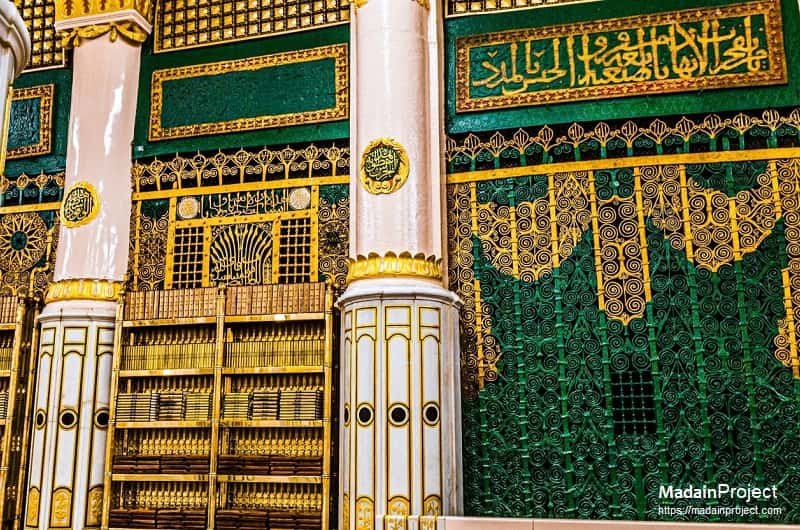
Riaz ul Jannah, also known as the Noble Rawdah, is one of the most spiritually significant places in Islam. It lies within Masjid al-Nabawi in Madinah, the city of the Prophet ﷺ. For millions of pilgrims performing Umrah or visiting Madinah for Ziyarat, praying in Riaz ul Jannah is a deeply emotional and life-changing experience.
This guide explains what Riaz ul Jannah is, why it matters, how to visit it legally, and how to prepare both practically and spiritually, based on current regulations and authentic historical context.
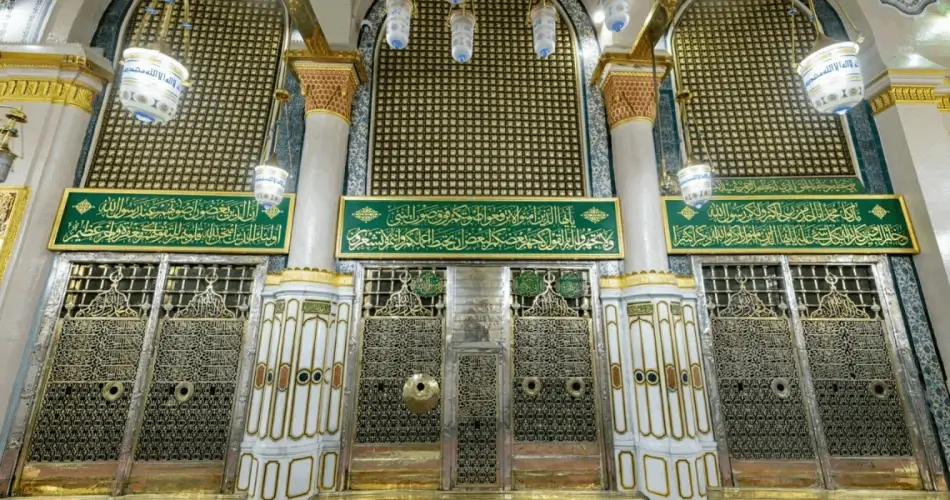
Riaz ul Jannah is a specific, clearly defined area inside Masjid al-Nabawi, located between the blessed chamber of Prophet Muhammad ﷺ and his Minbar (pulpit). The word Rawdah literally means a garden, and this area is described by the Prophet ﷺ himself as a garden from Paradise.
Unlike the rest of the mosque, which is carpeted in red, Riaz ul Jannah is identified by its green carpet, making it easy to recognize once inside the old section of the mosque.
The immense importance of Riaz ul Jannah comes from a well-known authentic hadith in which the Prophet ﷺ said:
“Between my house and my pulpit is a garden from the gardens of Paradise.”
Because of this statement, scholars agree that prayer and supplication in Rawdah carry exceptional spiritual weight. Many believers feel a unique sense of peace, humility, and closeness to Allah when praying there.
While reward ultimately comes from sincerity, praying in Riaz ul Jannah is considered among the most virtuous acts a visitor can perform in Madinah.
Recommended: Jannat ul Baqi
Riaz ul Jannah lies between the Prophet’s ﷺ sacred chamber (Hujrah) and the Minbar, in the older part of Masjid al-Nabawi. When facing the Qiblah, it is located slightly toward the front-left section of the mosque.
Because access is regulated, visitors usually enter in organized groups rather than freely walking in.
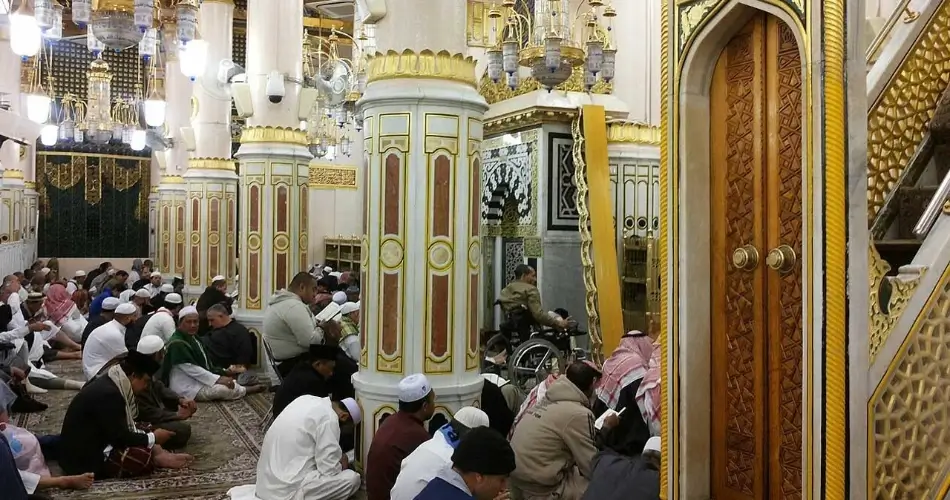
Riaz ul Jannah measures approximately 22 meters in length and 15 meters in width. Despite its small size, it accommodates pilgrims from all over the world throughout the year.
The green carpet is its most visible marker and symbolizes its distinction from the rest of the mosque.
Within and around the Rawdah area are eight historically significant pillars, many dating back to early Islamic and Ottoman periods. These pillars mark important moments in the Prophet’s ﷺ life and the early history of the mosque. Among them are the Pillar of Repentance, the Pillar of Ayesha (RA), and the Weeping Pillar.
These pillars are not objects of worship but serve as historical markers that deepen the visitor’s understanding of Islamic history.
Entry into Riaz ul Jannah is strictly controlled to manage crowds and ensure safety. A valid digital permit is required through the official Nusuk App.
To book your visit, you must:
As of current regulations, most visitors are allowed only one Rawdah visit per year, though policies may change. Always rely on the app for the latest rules.
Timings are gender-specific and carefully managed.
Men generally have multiple windows throughout the day and night, including pre-Fajr and extended daytime periods. Women are usually allowed entry during designated slots after Fajr and after Isha, with separate gates and queues.
Actual access depends entirely on the time slot shown in your Nusuk permit, not general estimates.
Visitors are guided through specific gathering areas and gates such as Bab Jibreel, Bab al-Rahmah, or nearby access points. Security staff release pilgrims in groups, allowing a limited stay of around 20 minutes inside Rawdah.
Following instructions calmly ensures a smooth experience for everyone.
Before entering Rawdah, it is best to:
Spiritually, pilgrims are encouraged to renew their intention, recite salawat upon the Prophet ﷺ, and focus on humility rather than rushing or crowding.
Once inside, pray two rak‘ahs of voluntary prayer, often with the intention of Tahiyyat al-Masjid. Spend remaining time making sincere du‘a, remembering Allah, and sending blessings upon the Prophet ﷺ.
There is no requirement to pray at a specific tile or pillar. The entire Rawdah is blessed.
Pushing, shouting, or insisting on specific spots contradicts the spirit of the visit. Respecting others, especially elderly pilgrims and women, is essential.
Obedience to mosque staff and calm movement are acts of worship in themselves.
For pilgrims traveling between cities, comfortable and reliable transportation plays a key role in maintaining focus and energy. Many visitors choose private transport services for:
For families, elderly pilgrims, or Umrah groups, pre-arranged Madinah Ziyarat taxi services help ensure timely arrival for Rawdah appointments without stress or delays.
Riaz ul Jannah is not just a place to visit—it is a moment to experience. Understanding its significance, respecting its rules, and preparing both spiritually and practically allows pilgrims to benefit fully from this rare opportunity.
With proper planning, lawful permits, and reliable transport during your Umrah or Ziyarat journey, visiting Rawdah becomes a peaceful, meaningful, and unforgettable part of your time in Madinah.
Recommended Our Private Taxi Service
Is Riaz ul Jannah open without a permit?
No. A valid Nusuk App permit is mandatory.
Can women and men enter together?
No. Entry timings and access are strictly separated.
How long can I stay inside Rawdah?
Usually around 15–20 minutes, depending on crowd flow.
Is prayer in Riaz ul Jannah better than anywhere else?
It holds exceptional virtue, but sincerity and good manners are essential everywhere.
What is the easiest way to reach Masjid al-Nabawi for Rawdah prayer?
Using pre-booked private transport or Ziyarat taxi services ensures timely arrival, especially for early-morning or night slots.