Jabal e Rehmat History Guide – Jabal al-Rahmah (Mount of Mercy) at Arafat
Jabal e Rehmat, also known as Jabal al‑Rahmah, is one of the most spiritually significant landmarks within the plain of Arafat. Situated approximately 20–22 kilometers east of Makkah, this modest granite hill carries immense historical, theological, and emotional weight for Muslims around the world.
Although physically small, Jabal e Rehmat stands at the heart of one of Islam’s greatest moments of reflection, repentance, and divine mercy-the Day of Arafat.
Location and Identity of Jabal e Rehmat
Jabal e Rehmat rises gently from the vast plain of Arafat, reaching about 65 meters above the surrounding ground, with its summit approximately 372 meters above sea level. Its position on the eastern side of Arafat makes it easily recognizable, especially due to the prominent white pillar that marks its peak today.
Historically, the mountain has been known by several names, including Mount of Mercy, Mount of Repentance, and Jabal al-Dua. Each name reflects a particular spiritual meaning tied to supplication, forgiveness, and humility before Allah.
Why Jabal e Rehmat Is Called the Mount of Mercy
The title “Mount of Mercy” is deeply rooted in Islamic tradition. Many Muslims believe that this is the place where Prophet Adam and Hawwa were reunited after descending to Earth and where Allah accepted their repentance. This association made the mountain a lasting symbol of divine forgiveness and second chances.
Beyond this narrative, the name also reflects the broader reality of the Day of Arafat, when millions of pilgrims gather seeking Allah’s mercy, believing it to be one of the days when forgiveness is granted most abundantly.
Jabal e Rehmat in the Context of Hajj
Wuquf at Arafat – The Core of Hajj
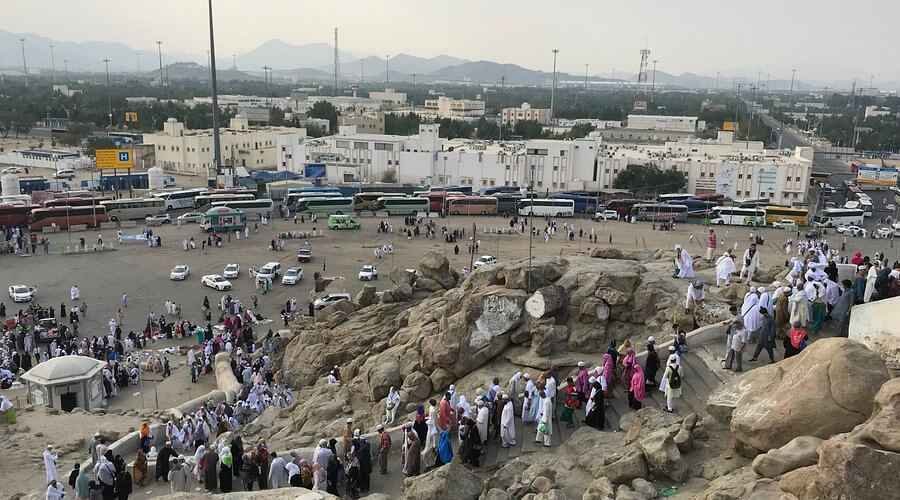
The importance of Jabal e Rehmat cannot be understood without understanding Arafat itself. The Prophet Muhammad said, “Hajj is Arafat,” emphasizing that standing in Arafat (Wuquf) on the 9th of Dhul-Hijjah is the central pillar of the entire pilgrimage.
Wuquf does not require standing on Jabal e Rehmat specifically. Any place within the boundaries of Arafat, from after midday until sunset, fulfills this obligation. The mountain serves as a landmark and focal point, not a requirement.
Clarifying Common Misconceptions
Many pilgrims mistakenly believe that climbing Jabal e Rehmat is obligatory. Islamic scholars consistently clarify that this is not the case. The Prophet ﷺ made his supplication near the base of the mountain, teaching that sincerity of heart matters more than physical location.
Touching stones, writing names on rocks, or seeking blessings from the pillar itself has no religious basis and is discouraged to preserve the sanctity of the site.
The Farewell Sermon and Its Historical Impact
During the Farewell Pilgrimage in 632 CE, the Prophet Muhammad ﷺ delivered his historic Farewell Sermon in the Arafat area. While parts of the sermon were delivered across the plain, Jabal e Rehmat is closely associated with this moment due to its location within Arafat.
The sermon laid down universal principles of justice, equality, human dignity, and the rights of women-values that continue to guide Muslim societies today. This connection further elevates the mountain’s significance beyond symbolism, anchoring it firmly in Islamic history.
Physical Features and Landscape of Jabal e Rehmat
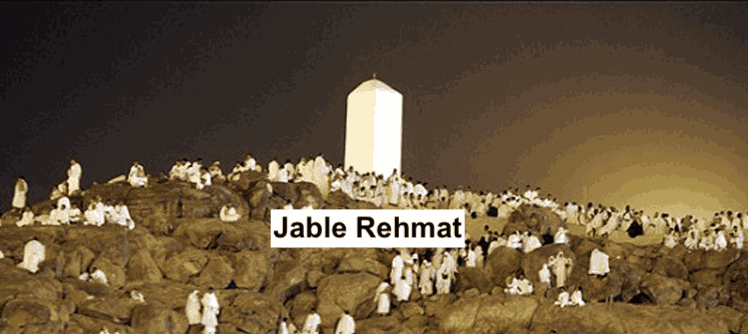
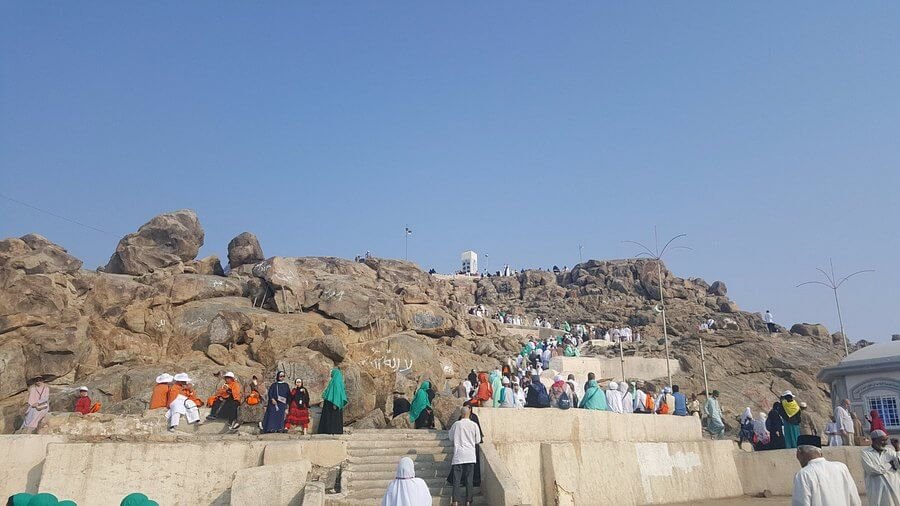
Jabal e Rehmat is composed of large, hard black stones typical of the Hijaz region. Its summit is relatively flat, enclosed by a low protective wall approximately 57 centimeters high, allowing visitors to stand or sit safely.
Stone steps on the southern side provide access to the top, making the climb manageable for most visitors in normal conditions. The white pillar at the summit acts purely as a visual marker, helping pilgrims orient themselves across the expansive plain of Arafat.
Historical Developments Around the Mountain
Over the centuries, several structures were built around Jabal e Rehmat to support pilgrims. Classical Islamic records mention stairways, water channels commissioned during the Abbasid period, and small prayer areas near its base.
Modern Saudi authorities have focused on safety, crowd management, and preservation, ensuring that the site remains accessible while protecting it from practices that could damage its historical character.
Visiting Jabal e Rehmat Outside Hajj (Umrah & Ziyarat)
While Arafat rituals are exclusive to Hajj, many visitors on Umrah or Ziyarat tours visit Jabal e Rehmat to understand its history and spiritual meaning. Outside the Hajj season, the area is calm and reflective, offering an opportunity for quiet supplication and learning.
Pilgrims often reach Arafat as part of guided Makkah Ziyarat itineraries. Reliable private transport is essential due to the distance from central Makkah. Many visitors choose Jeddah to Makkah taxi services, or dedicated Makkah Ziyarat taxi options, especially when traveling with family or elderly members.
For larger groups, vehicles such as Car, Hyundai Staria, Toyota Hiace, Coaster, or Bus provide comfort and coordinated access to Arafat and other sacred sites.
Best Time and Etiquette for Visiting Jabal e Rehmat
The best time to visit outside Hajj is early morning or late afternoon, when temperatures are lower. Visitors are encouraged to maintain humility, avoid crowding, and focus on remembrance and dua rather than physical ascent.
Comfortable transport plays a key role in ensuring a peaceful visit. Pilgrims traveling onward to Madinah often combine their journey with Madinah Ziyarat taxi services, allowing them to move smoothly between spiritually significant locations without logistical stress.
Spiritual Lessons and Meaning of Mercy at Arafat
Jabal e Rehmat represents more than a physical hill-it symbolizes the essence of repentance, equality, and hope. On the Day of Arafat, distinctions of status disappear as millions stand together in simple garments, reminding believers of accountability, humility, and renewal.
For many, even visiting the site outside Hajj reinforces the message that Allah’s mercy is always accessible through sincere repentance and sincere intention.
Conclusion
Jabal e Rehmat stands as a silent witness to some of the most profound moments in Islamic history-from the repentance of Adam and Hawwa to the final public message of the Prophet Muhammad ﷺ. While climbing the mountain is not an act of worship, understanding its history deepens a pilgrim’s appreciation of Arafat and the essence of Hajj itself.
Whether visited during Hajj or as part of a Ziyarat journey, Jabal e Rehmat reminds every believer that mercy, forgiveness, and renewal remain central to the Islamic faith.
FAQs
Is standing on Jabal e Rehmat required for Hajj?
No. The obligation is Wuquf anywhere within Arafat. The mountain is only a landmark.
Can Umrah pilgrims visit Jabal e Rehmat?
Yes. It is commonly included in Makkah Ziyarat tours, though no ritual is performed there during Umrah.
What is the best way to reach Jabal e Rehmat?
Private transport is the most practical option, especially from Makkah or Jeddah, due to distance and heat.
Is the white pillar a religious object?
No. It is a visual marker only and has no religious function.
What does Jabal e Rehmat symbolize spiritually?
It represents Allah’s mercy, acceptance of repentance, and the core message of humility and equality in Islam.