If you’re looking affordable private services in Saudi Arabia, contact Now for Umrah Taxi service.
Talbiyah Umrah Guide: Meaning, Arabic Text, When to Recite & Common Mistakes


February 11, 2026
If you’re looking affordable private services in Saudi Arabia, contact Now for Umrah Taxi service.
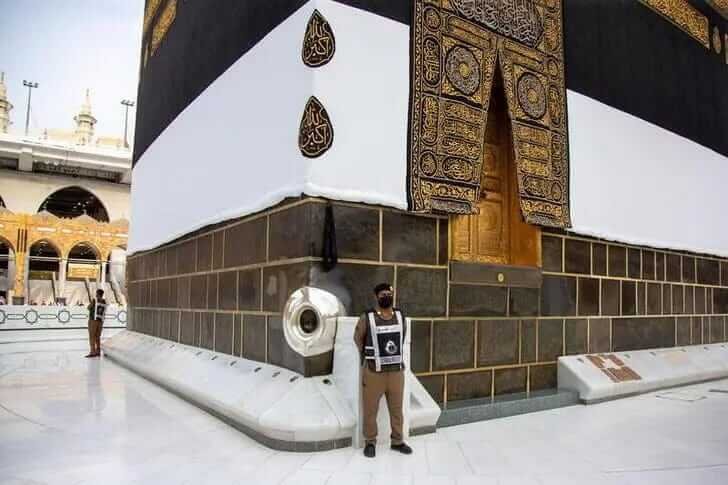
The Black Stone of Mecca, known in Arabic as Hajar al-Aswad, is one of the most sacred relics in Islam. Embedded in the eastern corner of the Kaaba inside Masjid al-Haram, it marks the starting and ending point of Tawaf, the circumambulation performed during Hajj and Umrah. For millions of pilgrims each year, encountering the Black Stone is a deeply spiritual moment tied to faith, humility, and prophetic tradition.
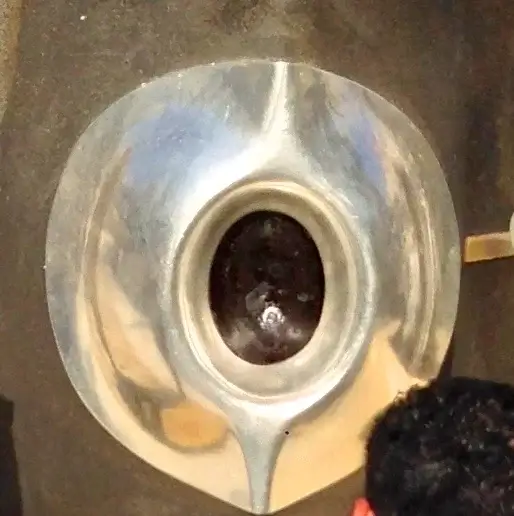
The Black Stone is a revered stone set into the Rukn al-Aswad (Black Stone Corner) of the Kaaba. Pilgrims align themselves with it to begin each circuit of Tawaf, moving counter-clockwise around the Kaaba. Its role is not decorative or symbolic alone; it serves as a ritual marker embedded in the lived practice of Islamic worship since the time of Prophet Ibrahim عليه السلام.
Although often imagined as a single rock, the Black Stone today consists of seven to eight small fragments, fused together with a natural bonding substance historically mixed with musk and amber. These fragments are held securely within a teardrop-shaped silver frame, mounted approximately 1.5 meters above ground level.
The exposed surface appears dark black with reddish-brown tones, smoothed over centuries by the touch of countless pilgrims. The silver encasement not only protects the fragments but also visually distinguishes the stone within the Kaaba’s wall.
Islamic tradition holds that the Black Stone descended from Paradise (Jannah) and was brought to earth by Angel Jibreel (Gabriel). It was entrusted to Prophet Ibrahim (Abraham) during the construction of the Kaaba with his son Ismail. According to authentic narrations, the stone was originally white, becoming black over time due to the sins of humanity.
In 605 CE, before receiving prophethood, Muhammad ﷺ played a pivotal role in resolving a conflict among the Quraysh tribes over who would place the Black Stone during Kaaba reconstruction. His solution-placing it on a cloth and allowing all tribal leaders to lift it together-cemented his reputation for wisdom and justice.
Across centuries, the Black Stone endured fires, attacks, and the infamous Qarmatian theft in 930 CE, when it was removed from Makkah and held for over twenty years before being returned. These events explain its fragmented state today and underscore its long, preserved history within Islamic civilization.
The Black Stone is honored, not worshipped. Islamic scholars consistently emphasize that reverence for it is an act of obedience to Allah and adherence to the Sunnah-not belief in the stone’s independent power. Umar ibn al-Khattab رضي الله عنه famously stated that he kissed it only because he saw the Prophet ﷺ do so.
Islamic tradition also teaches that the Black Stone will testify on the Day of Judgment for those who greeted it with sincerity and faith.
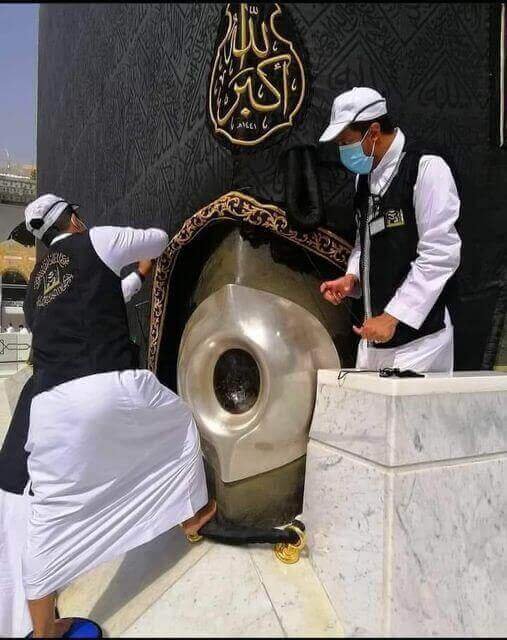
Greeting the Black Stone, known as Istilam, is a Sunnah performed at the beginning of each Tawaf circuit. Pilgrims may:
All three are valid, with safety and respect taking priority.
Modern pilgrimage involves dense crowds, especially near the Black Stone corner. Islamic law is clear: avoiding harm to others is obligatory, while kissing the stone is recommended. Calm movement, patience, and awareness of elderly or weaker pilgrims reflect the true spirit of worship.
Because invasive testing is not permitted, the Black Stone’s composition remains unconfirmed. Some researchers suggest it may be of meteoritic origin, while others propose volcanic or agate-like material. These theories remain speculative and do not affect its religious status, which is rooted in revelation and tradition rather than material analysis.
For pilgrims arriving in Makkah, understanding the Black Stone’s location and role helps reduce confusion during Tawaf. Many visitors prefer arriving at Masjid al-Haram during less crowded times, especially late night or after mid-morning prayers.
Reliable transportation plays an important role here. Pilgrims traveling from Jeddah to Makkah, or those planning Makkah and Madinah Ziyarat, often benefit from licensed private transport that allows flexible timing, rest stops, and group coordination-especially for families or elderly pilgrims.
Group travelers commonly choose Toyota Hiace, Coaster, or Bus options, which make moving between hotels, Haram, and Ziyarat locations more comfortable and organized during spiritually intense days.
The Black Stone of Mecca stands as a powerful reminder of faith, continuity, and submission to Allah. From its heavenly origin to its place in Tawaf today, Hajar al-Aswad connects modern pilgrims with prophets, history, and centuries of devotion. Approaching it with knowledge, humility, and respect transforms the act of Tawaf into a deeply meaningful spiritual journey.
Is the Black Stone worshipped in Islam?
No. Muslims worship Allah alone. The Black Stone is honored as part of prophetic tradition.
Do I have to kiss the Black Stone during Umrah or Hajj?
No. Pointing toward it from a distance fulfills the Sunnah when crowds are heavy.
Why is the Black Stone black?
Islamic tradition states it became black after absorbing the sins of humanity.
Where exactly is the Black Stone located?
It is set into the eastern corner of the Kaaba, known as Rukn al-Aswad.
Can women perform Istilam?
Yes, following the same safety and etiquette guidelines as men.