If you’re looking affordable private services in Saudi Arabia, contact Now for Umrah Taxi service.
Talbiyah Umrah Guide: Meaning, Arabic Text, When to Recite & Common Mistakes


March 7, 2026
If you’re looking affordable private services in Saudi Arabia, contact Now for Umrah Taxi service.
The Haram boundary refers to the sacred limits surrounding the holy city of Makkah. Within this protected sanctuary lies the most sacred site in Islam, Masjid al‑Haram and the Holy Kaaba.
For Muslims performing Hajj or Umrah, understanding these boundaries is important because special religious rulings apply inside this area. Acts of worship performed within the Haram carry immense reward, while certain actions such as hunting or damaging plants are prohibited.
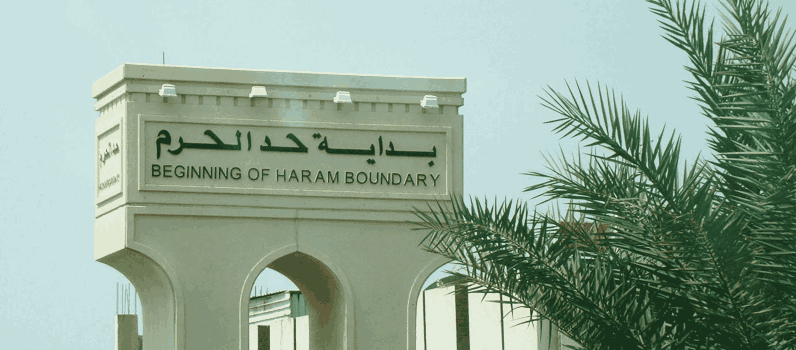
Today, the limits of the sanctuary are clearly marked with signs and stone pillars known as Hudud al-Haram. Pilgrims traveling between cities such as Jeddah, Makkah, and Madinah will often see these markers along major highways and roads.
Understanding where these sacred limits lie helps pilgrims follow the rules correctly and perform their Umrah or Hajj with confidence and respect for the sanctity of the Haram.
The Arabic term Haram refers to a sacred sanctuary where certain actions are restricted out of reverence for Allah. In the context of Makkah, the Haram represents the protected land surrounding the Kaaba.
Inside this sacred zone:
This sacred status emphasizes the spiritual importance of the area and reminds visitors that they are entering a place honored by Allah.
The sanctuary around Makkah is not only a religious symbol but also an area historically protected for peace, safety, and worship.
Islamic tradition teaches that the boundaries of the Haram were first established by Prophet Ibrahim under the guidance of Allah. These limits were set to protect the sanctity of the Kaaba and the surrounding land.
Later, the boundaries were reaffirmed during the time of Prophet Muhammad, who ordered that the markers be renewed and clearly defined for the community.
Throughout Islamic history, leaders continued to maintain these boundary markers to ensure the limits remained visible. Early companions also supervised the restoration of the boundary pillars so that pilgrims and travelers could easily recognize the sacred zone.
Despite centuries of development around Makkah, the essential boundaries of the Haram remain the same today.
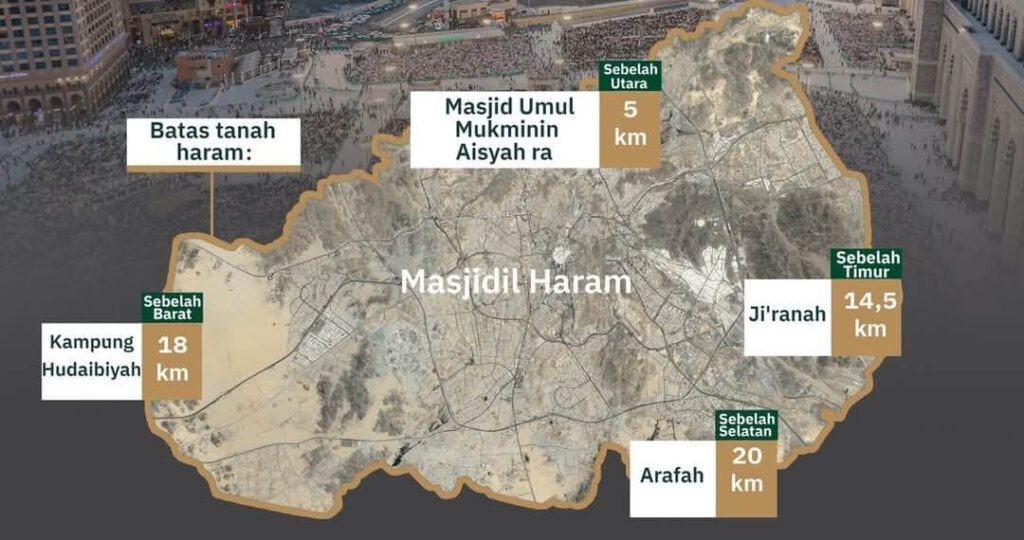
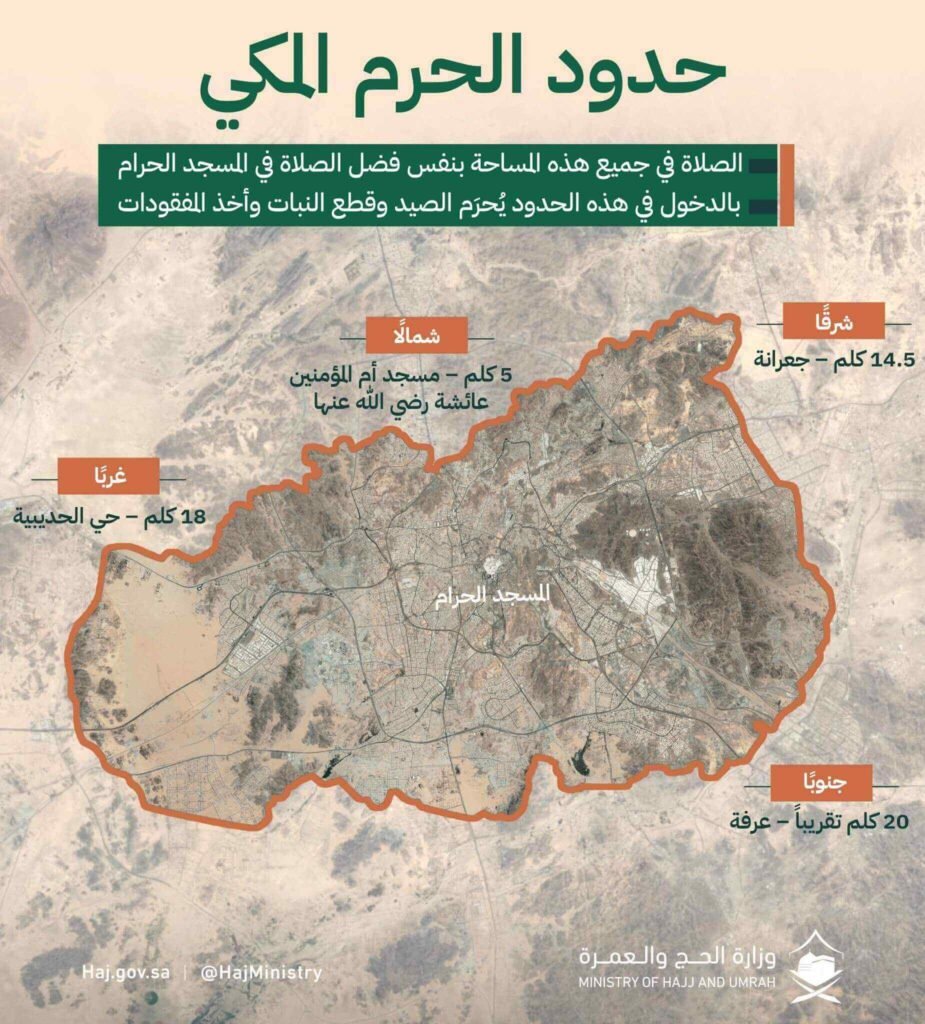
The Haram forms a sacred ring around the Kaaba, extending several kilometers in different directions. Each route leading toward Makkah has a recognized boundary point where the sanctuary begins.
One of the closest boundary points is located at Masjid Aisha (Taneem), about 6–8 kilometers north of the Kaaba.
This mosque is extremely significant for pilgrims because it lies just outside the Haram boundary. Many people staying in Makkah travel here to enter Ihram for another Umrah before returning to the Grand Mosque.
Because of its proximity to the city, Taneem is the most commonly visited boundary location.
On the road between Jeddah and Makkah lies the western boundary near the historic area of Hudaybiyyah, also known as Shumaisi.
This location is associated with the historic Treaty of Hudaybiyyah. The boundary marker here indicates the point where travelers officially enter the sacred sanctuary of Makkah when approaching from the Red Sea coast.
On the southern route toward Yemen lies the boundary area known as Idat Laban, approximately 11–12 kilometers from the Kaaba.
Pilgrims traveling from southern regions of Saudi Arabia will pass this marker before entering the Haram zone.
On the eastern route toward Iraq lies the area of Wadi Nakhla, where the boundary marker indicates the start of the Haram region.
This direction historically served as one of the main caravan routes to Makkah.
Another important boundary point lies near Masjid al‑Ji’ranah, located roughly 15 kilometers from the Kaaba.
This place holds historical importance because the Prophet entered Ihram from here after returning from the Battle of Hunayn.
The southeastern limit of the Haram lies near Masjid Namirah and the valley of Wadi Uranah, close to the plain of Mount Arafat.
It is important to note that the plain of Arafat itself is outside the Haram boundary, which is why pilgrims travel there during Hajj for the standing at Arafat.
Today, the limits of the Haram are clearly marked to help pilgrims identify them easily.
Markers include:
These markers appear along highways leading into Makkah and are visible to drivers traveling from surrounding cities.
Special Islamic rulings apply within the sanctuary of Makkah.
Among the most important rules:
Hunting or harming wild animals inside the Haram is prohibited. Even people who are not in Ihram must respect this rule.
Cutting naturally growing trees or plants is also forbidden unless necessary and permitted under Islamic guidelines.
Fighting, quarrelling, or causing harm to others within the sanctuary is considered a serious violation of the sacred nature of the area.
At the same time, acts of worship such as prayer, charity, and remembrance of Allah bring multiplied rewards when performed in this sacred environment.
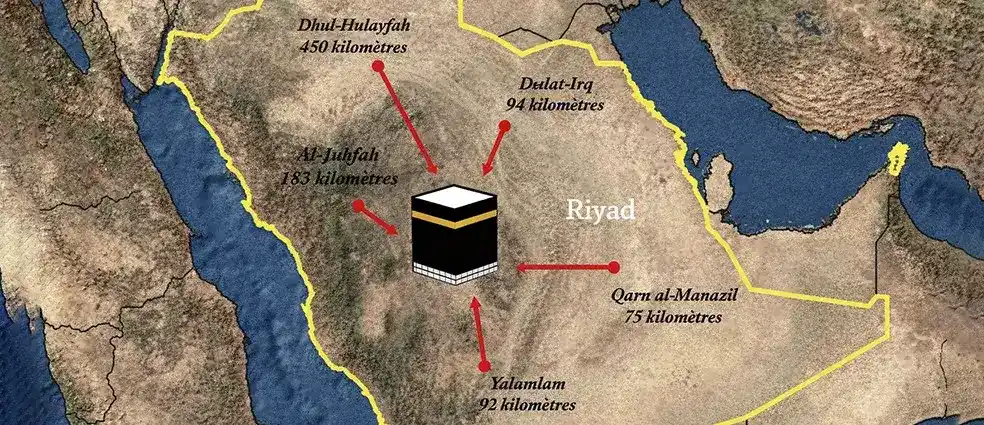
Many pilgrims confuse the Haram boundary with Miqat, but the two are different.
Pilgrims staying inside Makkah who wish to perform another Umrah must leave the Haram boundary and enter Ihram again before returning.
The most common location for this purpose is Masjid Aisha at Taneem because it is the closest boundary point to the Grand Mosque.
Many pilgrims arrange a short round trip from their hotel in Makkah to Taneem and back, which usually takes less than 30 minutes.
Private transport is often the easiest option for families or groups who want a quick and comfortable journey.
Just as Makkah has a sanctuary, Madinah also has a sacred boundary surrounding Al‑Masjid an‑Nabawi.
The Madinah sanctuary extends between two mountains:
Similar to the Haram of Makkah, this area is respected as a protected sanctuary where hunting wildlife and harming natural vegetation are prohibited.
Pilgrims often need to travel to specific boundary locations during their journey, especially when preparing for Umrah.
For example, visitors arriving at King Abdulaziz International Airport in Jeddah usually travel directly to Makkah. Reliable transportation helps ensure the journey is smooth and comfortable, especially for families or elderly pilgrims.
Many visitors also travel between Makkah and Madinah for Ziyarat. Comfortable private transport options such as Camry sedans, Hyundai Staria vans, or larger vehicles like Toyota Hiace and Coaster buses are commonly used for group travel.
These services can also help pilgrims reach locations like Taneem or Ji’ranah quickly when they need to leave the Haram boundary to enter Ihram again.
The Haram boundary of Makkah represents one of the most sacred zones in Islam. It surrounds the Kaaba and preserves the spiritual sanctity of the holy city.
These boundaries, first established by Prophet Ibrahim and reaffirmed throughout Islamic history, continue to guide pilgrims today. Clear markers and road signs make it easier for travelers to identify when they are entering or leaving the sacred sanctuary.
Understanding the limits of the Haram helps pilgrims respect its rules, avoid mistakes during Umrah, and appreciate the profound spiritual significance of the land surrounding the House of Allah.
The Haram boundary is the sacred sanctuary that surrounds the Kaaba and Masjid al-Haram. Special Islamic rules apply inside this area, including prohibitions against hunting animals and cutting natural vegetation.
The distance varies depending on direction. The closest boundary point is at Masjid Aisha in Taneem, about 6–8 km from the Kaaba.
Yes. Pilgrims inside Makkah can leave the Haram boundary, enter Ihram outside the sanctuary, and then return to perform another Umrah.
The closest and most commonly used location is Masjid Aisha (Taneem), located north of Makkah.
Yes. The boundaries are marked with stone pillars and road signs labeled Hudud al-Haram, making them easy to recognize when traveling.