
If you’re looking affordable private services in Saudi Arabia, contact Now for Umrah Taxi service.
Talbiyah Umrah Guide: Meaning, Arabic Text, When to Recite & Common Mistakes


March 4, 2026
If you’re looking affordable private services in Saudi Arabia, contact Now for Umrah Taxi service.
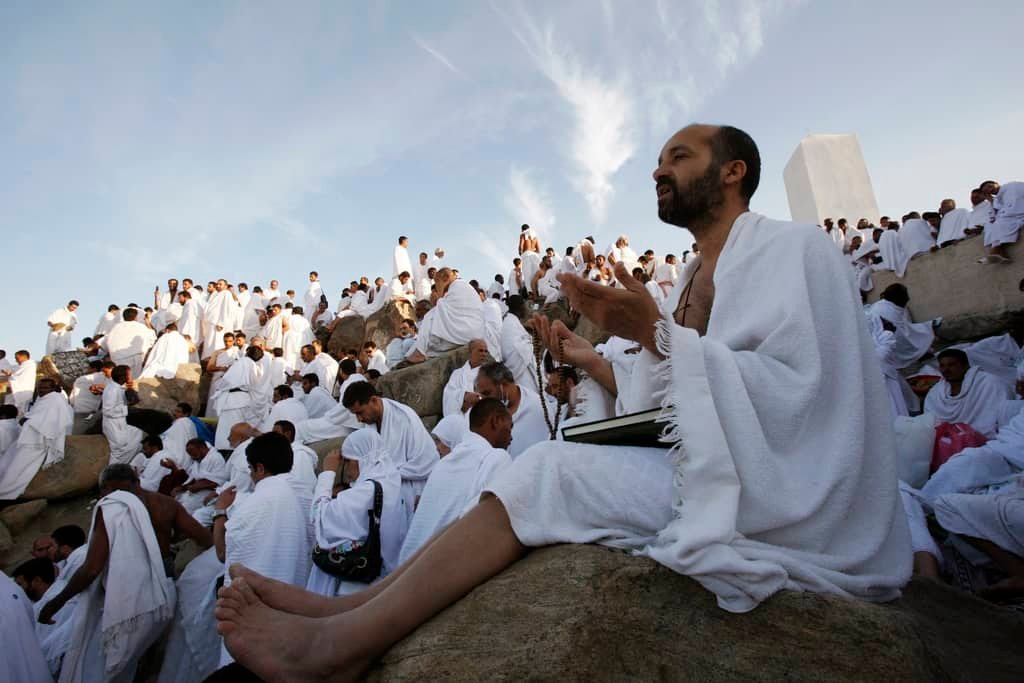
Ihram refers to the sacred spiritual state a Muslim must enter before performing Hajj or Umrah. Linguistically, the word originates from the Arabic root ḥ-r-m, meaning “to make something forbidden.” In Islamic practice, Ihram signifies entering a condition where specific lawful actions become temporarily prohibited as an act of obedience to Allah.
Importantly, Ihram is not limited to clothing. While the two white garments worn by men are commonly called Ihram, the essence of Ihram is the intention (niyyah) and commitment to abide by its rules once the Miqat boundary is crossed. A pilgrim in this state is known as a Muhrim.
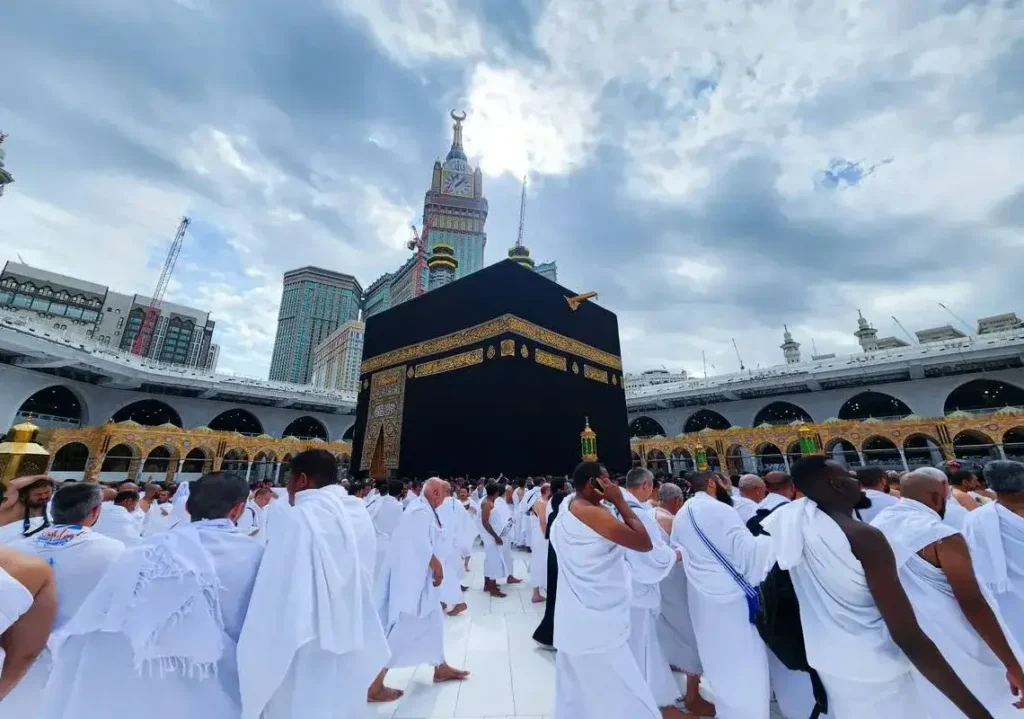
Ihram represents a profound spiritual reset. By removing markers of wealth, status, and nationality, pilgrims stand equal before Allah. This state trains patience, humility, restraint, and mindfulness. Worldly distractions are reduced, allowing the pilgrim to focus entirely on worship, repentance, and sincerity.
The simplicity of Ihram clothing and the discipline it requires embody the universal message of Islam: no superiority except through piety.
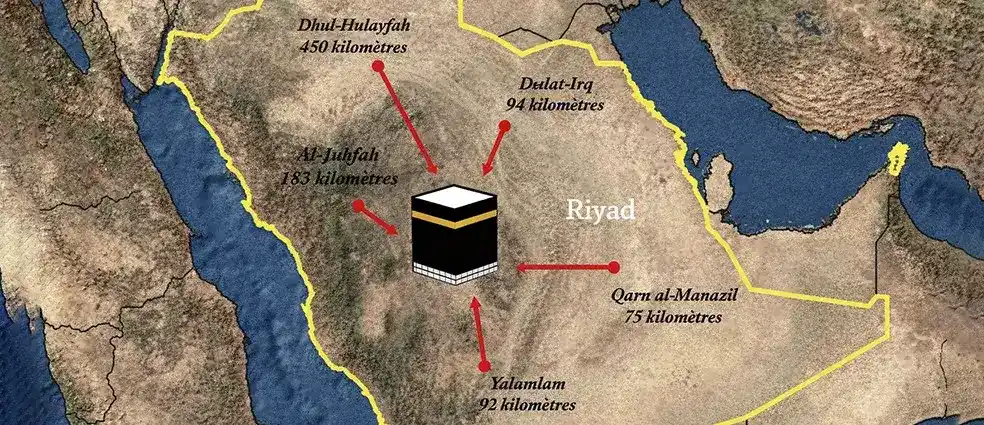
Ihram must be assumed before crossing the Miqat, the prescribed boundary surrounding Makkah. Crossing the Miqat without Ihram requires expiation, even though the pilgrimage remains valid.
Pilgrims flying into Jeddah commonly enter Ihram:
For this reason, travelers using Jeddah to Makkah taxi services often prefer to be fully prepared before landing, ensuring a smooth and stress-free transfer after arrival.
Those visiting Madinah before Makkah should not enter Ihram until departing for Makkah. The designated Miqat is Masjid Dhul Hulayfah, where pilgrims may bathe, pray, and make intention.
Pilgrims traveling by road or train are typically informed when the Miqat is reached, making proper planning essential-especially for those arranging Madinah to Makkah private transport.
Before assuming Ihram, pilgrims should attend to personal hygiene as a Sunnah practice. This includes trimming nails, removing underarm and pubic hair, and performing ghusl. Ghusl is recommended for all pilgrims, including women experiencing menstruation.
Preparation reflects respect for the sacred journey and readiness to enter a heightened state of worship.
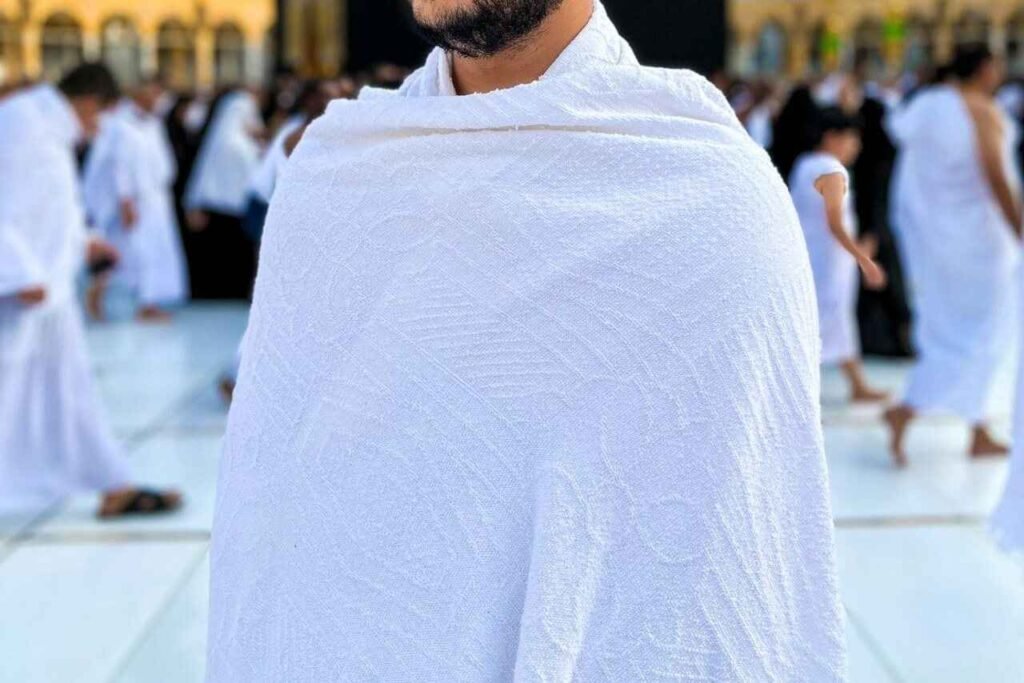
Men wear two unstitched white cloths:
Stitched or tailored clothing, underwear, and head coverings are prohibited. Footwear must leave the ankles exposed. Men must keep the body properly covered and maintain dignity in movement and posture throughout the state of Ihram.
Women may wear normal modest clothing of any color. The face and hands remain uncovered, though a loose covering that does not touch the face is permitted. Gloves and face veils that rest on the skin are not allowed.
After changing into Ihram garments, it is recommended to perform two rak’ahs of Salah al-Ihram, provided it is not a prohibited prayer time. The pilgrim then makes the niyyah for Umrah, Hajj, or both.
The intention is made from the heart, and verbal expression is recommended for clarity and focus. Once niyyah is made, the pilgrim formally enters the state of Ihram.
لَبَّيْكَ اَللَّهُمَّ عُمْرَةً ❁
Labbayka Llāhumma ʿUmrah.O Allah, here I am to perform Umrah.
اَللَّهُمَّ إِنِّي أُرِيدُ الْعُمْرَةَ ❁
Allāhumma innī urīdu l-ʿUmrah.O Allah, I intend to perform Umrah.
اَللَّهُمَّ إِنِّي أُرِيدُ الْعُمْرَةَ فَيَسِّرْهَا لِي وَتَقَبَّلْهَا مِنِّي ❁
Allāhumma innī urīdu l-ʿUmrata fa yassirhā lī wa taqabbalhā minnī.O Allah, I intend to perform Umrah, so make it easy for me and accept it from me.
After niyyah, the pilgrim recites the Talbiyah, declaring submission to Allah. Men recite it audibly; women recite softly.
Talbiyah continues throughout the journey:
Its frequent recitation reinforces devotion, patience, and awareness of purpose.
During Ihram, pilgrims must avoid actions such as:
Many everyday actions remain permissible, including bathing with unscented products, changing Ihram garments, seeking medical treatment, and using shade.
The goal is not hardship, but conscious restraint and spiritual discipline.
If a prohibition is violated, Fidyah may be required, depending on the action and intention. Islam recognizes valid excuses such as illness or hardship, offering alternatives like charity or fasting.
Understanding these rules helps pilgrims maintain confidence and peace of mind throughout their journey.
Pilgrims often travel between cities during Ihram, such as:
Choosing reliable private Umrah and Ziyarat transport, including spacious vehicles like Hiace, Coaster, or buses, ensures comfort, modesty, and timely arrival-especially for families and groups traveling in Ihram.
Many pilgrims unintentionally make errors such as delaying intention too long, using scented products unknowingly, or misunderstanding clothing rules. Proper preparation, awareness, and calm travel arrangements significantly reduce these risks.
Ihram is the spiritual gateway to Hajj and Umrah. More than garments or restrictions, it is a sacred commitment to humility, obedience, and mindfulness. By understanding its rules, timing, and purpose-and planning travel carefully-pilgrims can begin their journey with confidence, serenity, and sincere devotion.
Can I change my Ihram clothes?
Yes, as long as the garments remain compliant and unscented.
What happens if I cross Miqat without Ihram?
A penalty is required, though the pilgrimage remains valid.
Can women perform Umrah while menstruating?
They may enter Ihram and perform all rites except Tawaf until purity.
Is Ihram required for Ziyarat travel?
Ihram is only required for Hajj or Umrah, not general Ziyarat trips.
| Al-Bukhari, Hadith No. 5891. |
| Abu Dawud, Hadith No. 1744; al-Tirmidhi, Hadith No. 945. |
| Click here for further information about permissible footwear in Ihram. |
| Ibn Majah, Hadith No. 2935; Abu Dawud, Hadith No. 1833. |
| Al-Bukhari, Hadith Mo. 5089 |
| Ibn Majah, Hadith No. 2925. |
| Al-Tirmidhi, Hadith No. 828; Ibn Majah, Hadith No. 2921. |