If you’re looking affordable private services in Saudi Arabia, contact Now for Umrah Taxi service.
Talbiyah Umrah Guide: Meaning, Arabic Text, When to Recite & Common Mistakes


February 4, 2026
If you’re looking affordable private services in Saudi Arabia, contact Now for Umrah Taxi service.
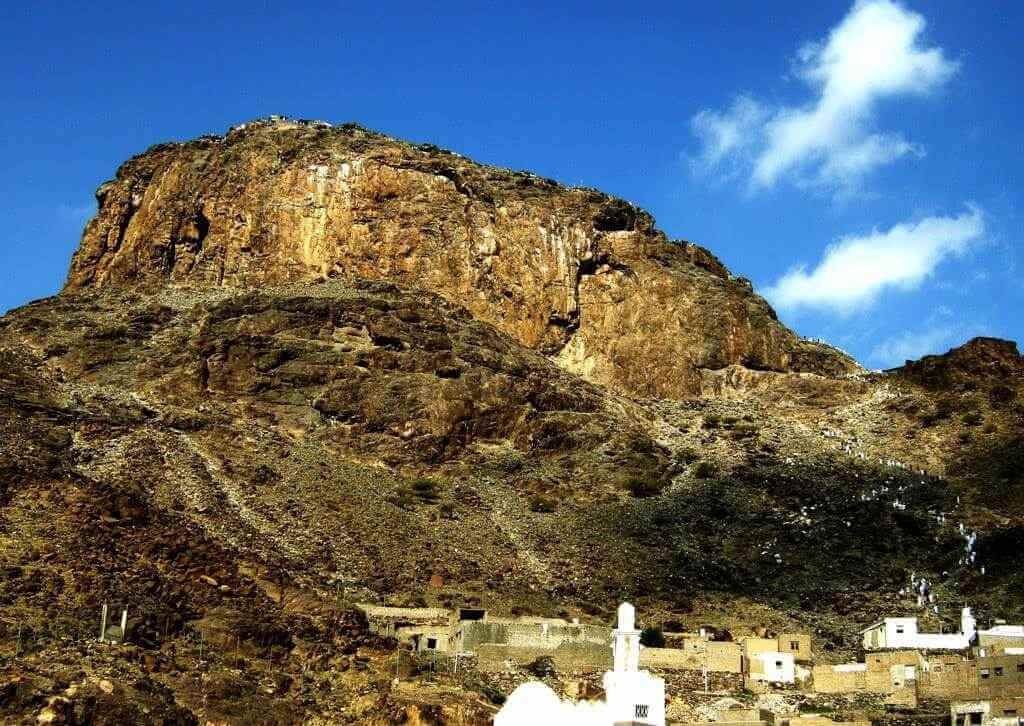
Jabal al Nour, meaning the Mountain of Light, is one of the most spiritually significant landmarks in Makkah. This rocky mountain is where Islamic history began, as it houses the Cave of Hira, the sacred place where Prophet Muhammad ﷺ received the first revelation of the Qur’an through Angel Jibreel.
Rising prominently on the northeastern side of Makkah, Jabal al Nour is visible from many parts of the city. Its distinctive shape, often compared to a camel’s hump, and its deep historical meaning make it a central destination for pilgrims and visitors interested in Islamic heritage.
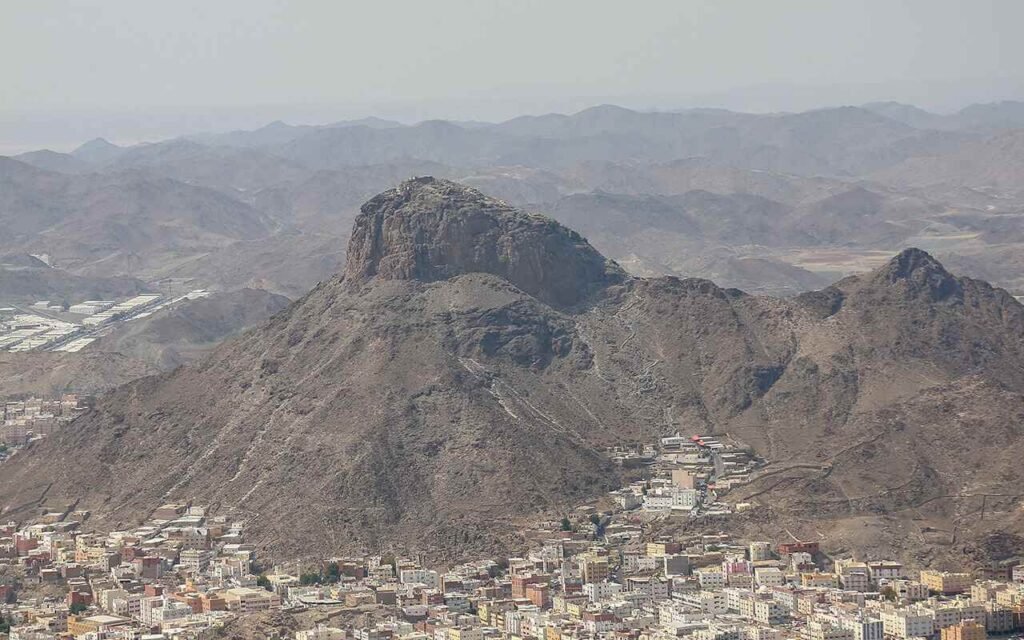
The importance of Jabal al Nour is inseparable from the first revelation of the Qur’an in 610 CE. Before prophethood, Prophet Muhammad ﷺ would retreat to the Cave of Hira for reflection and worship. It was here that the first verses of Surah Al-Alaq were revealed, marking the beginning of the Qur’anic message.
This event transformed human history, making Jabal al Nour not just a geographical feature, but a foundational site in Islam. While visiting the mountain is not an obligation in Umrah or Hajj, many pilgrims choose to visit it out of love, reflection, and a desire to connect with this moment in Islamic history.
Jabal al Nour is located approximately 4-6 kilometers northeast of Masjid al-Haram. The mountain reaches around 640 meters above sea level, rising sharply above the surrounding area.
Due to its elevation, the summit offers wide panoramic views of Makkah, and on clear days, parts of the Holy Mosque can be seen from higher points along the path.
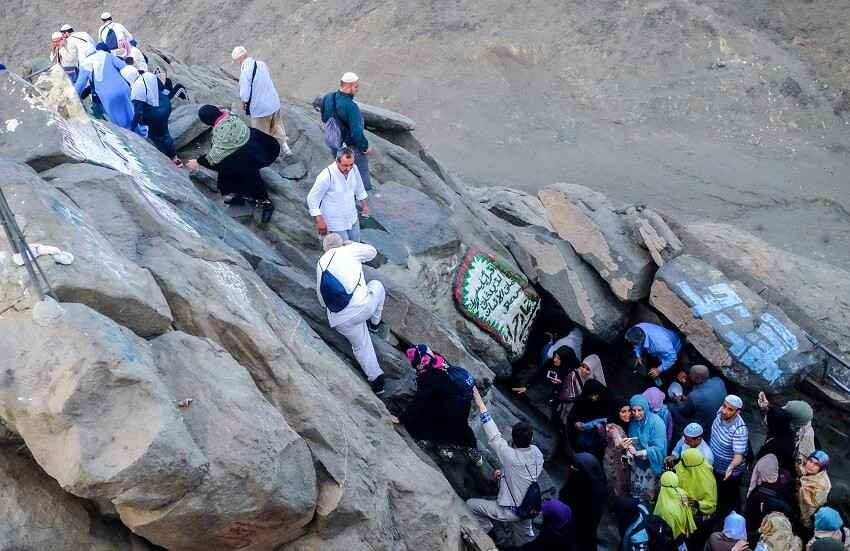
The Cave of Hira is a small, narrow grotto situated just below the summit. It measures roughly 3.5-4 meters in length and about 1.5-1.6 meters in width, accommodating only a few people at a time.
Inside, the space is quiet and simple, encouraging contemplation rather than prolonged stay. During peak seasons such as Ramadan or Hajj, visitors usually take turns entering briefly, offering du‘a and reflecting silently.
Respectful behavior, patience, and calm movement are essential, as the cave can become crowded.
Climbing Jabal al Nour is physically demanding.
The path is steep and rocky, requiring reasonable fitness and careful footing. Although recent improvements and rest points have made the route more organized, it remains unsuitable for people with serious heart, knee, or breathing conditions.
Visitors should pace themselves and stop immediately if they feel dizzy or excessively fatigued.
Timing greatly affects comfort and safety.
Night climbs are popular but require extra caution and a flashlight, as parts of the path remain uneven despite nearby lighting.
At the base of Jabal al Nour lies the Hira Cultural District, a thoughtfully developed area that adds educational depth to the visit. It includes exhibitions and interactive displays explaining the story of revelation, the Qur’an, and the historical context of the site.
For visitors unable or unwilling to climb, this district offers a meaningful alternative way to connect with the significance of Jabal al Nour.
Preparation is essential for a safe visit.
Wear:
Bring:
The most convenient way to reach Jabal al Nour is by private taxi, which can drop you close to the Hira Cultural District and the start of the climbing path.
Many pilgrims combine this visit with other sacred locations through a Makkah Ziyarat taxi, ensuring comfortable travel without navigating unfamiliar roads or parking limitations. For families or groups, larger vehicles such as Hyundai Staria, Toyota Hiace, Coaster, or Bus provide a practical solution.
Visitors arriving from Jeddah or Madinah often include Jabal al Nour as part of a wider ziyarat plan, alongside Masjid Aisha and other historical sites.
No. Visiting Jabal al Nour is not a ritual or requirement of Umrah or Hajj. Pilgrims receive full reward for their pilgrimage without climbing the mountain.
The visit is purely optional and should be approached as a historical and spiritual reflection, not an act of worship tied to pilgrimage rites.
Due to the steep climb, Jabal al Nour is not recommended for elderly visitors, young children, or those with health concerns. In such cases, appreciating the mountain from the base and visiting the Hira Cultural District is a safer and more suitable option.
Jabal al Nour stands as a powerful reminder of the moment when divine guidance first reached humanity. Visiting the Mountain of Light offers insight into the beginnings of Islam, the patience of the Prophet Muhammad ﷺ, and the depth of reflection that shaped the Qur’anic message.
Whether you choose to climb to the Cave of Hira or experience its meaning from the base, Jabal al Nour remains one of Makkah’s most profound historical landmarks. With proper preparation, respectful conduct, and thoughtful planning, your visit can become a deeply reflective part of your journey in the holy land.
Recommended Our Private Taxi
How far is Jabal al Nour from Masjid al-Haram?
Around 4–6 km northeast of the Haram.
How many steps are there to the Cave of Hira?
Approximately 1,200–1,750 steps, depending on the route taken.
Can I visit Jabal al Nour during Umrah?
Yes, it is commonly visited during Umrah, but it is optional.
Is there vehicle access to the top?
No, vehicles reach only the base; the climb must be done on foot.