If you’re looking affordable private services in Saudi Arabia, contact Now for Umrah Taxi service.
Talbiyah Umrah Guide: Meaning, Arabic Text, When to Recite & Common Mistakes


February 21, 2026
If you’re looking affordable private services in Saudi Arabia, contact Now for Umrah Taxi service.
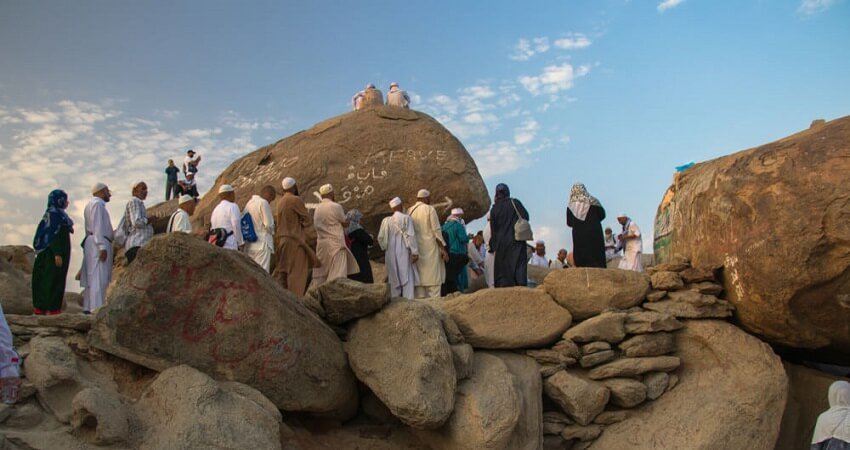
Jabal Thawr (Arabic: جبل ثور) is one of the most historically and spiritually significant mountains in Islam. Located to the south of Makkah, it rises to approximately 750 meters above sea level and is renowned for housing Ghar Thawr, the Cave of Thawr. This site is deeply connected to the Hijrah, the pivotal migration that reshaped Islamic history.
Unlike sites associated with ritual acts of Hajj or Umrah, Jabal Thawr is visited as a ziyārah-a voluntary visit for reflection, remembrance, and historical understanding.
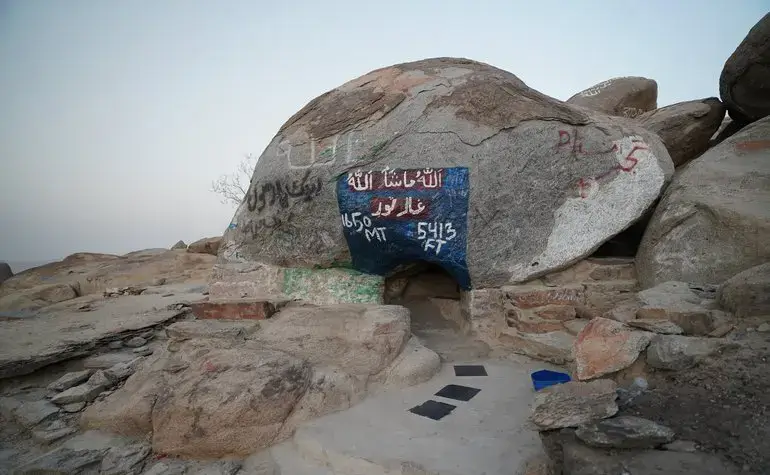
The enduring importance of Jabal Thawr comes from its role during the Hijrah of the Prophet ﷺ from Makkah to Madinah in 622 CE. As Quraysh forces intensified their pursuit, Prophet Muhammad ﷺ and his closest companion Abu Bakr رضي الله عنه sought refuge in the cave for three days and nights.
This moment is directly referenced in the Qur’an (Surah At-Tawbah 9:40), highlighting unwavering trust in Allah during a time of extreme danger. The cave became a symbol of tawakkul (complete reliance on Allah) and divine protection.
Jabal Thawr lies approximately 4 to 12 kilometers south of Makkah, depending on the route and reference point, and around 15–20 minutes by car from Masjid al-Haram. The mountain is accessible by road up to its base, after which visitors must climb on foot.
A developing Jabal Thawr Cultural District at the base provides historical context about the Hijrah, enhancing understanding before the ascent.
The Cave of Thawr is a natural hollow near the summit, positioned on one of the mountain’s upper peaks. The cave is modest in size, measuring roughly 3.5 meters in length and just over 1 meter in height in some sections. It has two openings, one facing east and another west, requiring visitors to crouch or turn sideways when entering.
Despite its small size, the cave carries immense meaning due to what occurred within its walls.
Islamic tradition narrates that when Quraysh search parties reached the cave’s entrance, Allah caused a spider to spin a web and doves to nest and lay eggs at the opening. Seeing these signs, the pursuers concluded that no one could have entered recently and turned back.
At that critical moment, when fear was natural, the Prophet ﷺ reassured Abu Bakr with the words that echo through Islamic history:
“Do not grieve; indeed Allah is with us.”
This event transformed Jabal Thawr into a lasting symbol of faith, patience, and divine help.
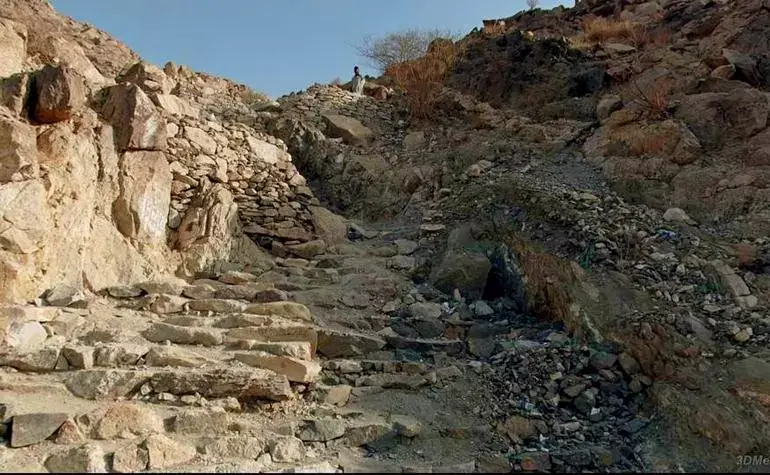
The ascent of Jabal Thawr is considered physically demanding. The path is steep, rocky, and uneven, with loose gravel and minimal shade. For an averagely fit adult, the climb typically takes 1.5 to 2 hours, while the descent may take 45 to 60 minutes.
Due to its difficulty, the climb is not recommended for elderly visitors, small children, or individuals with serious heart, knee, or respiratory conditions.
The most suitable months are November to February, when temperatures are significantly cooler. The best times of day are before Fajr or late afternoon after Asr, avoiding the intense midday heat that can exceed 40°C in warmer months.
Starting early also allows visitors to complete the climb with greater safety and spiritual focus.
Proper preparation is essential. Visitors should wear sturdy walking or hiking shoes with good grip, breathable and modest clothing, and carry at least 1.5–2 liters of water per person. Light snacks, sun protection, and a small backpack are advisable. If climbing before dawn or descending after sunset, a flashlight or headlamp is important.
Facilities beyond the base are minimal, so self-sufficiency is key.
Many visitors compare Jabal Thawr with Jabal al-Nour, home to the Cave of Hira. While both are spiritually significant, Jabal Thawr is higher, steeper, and more physically demanding. Jabal al-Nour is associated with the first revelation, whereas Jabal Thawr is tied to protection and migration. The experiences are distinct, and neither is a requirement of Hajj or Umrah.
Reaching the base of Jabal Thawr is easiest by private transport. Pilgrims often choose a Makkah Ziyarat taxi or private Umrah transport for flexibility, especially when starting before dawn. For families and groups, vehicles such as Car, Hyundai Staria, Hiace, Coaster, or Bus provide a safer and more comfortable option.
Visitors arriving from Jeddah or planning intercity travel can also combine their visit with a Jeddah to Makkah taxi, ensuring timely arrival and return without reliance on limited public transport.
Visiting Jabal Thawr is an act of remembrance, not a ritual. There is no specific salah or du‘a prescribed for the cave, and visitors should avoid practices seeking blessings from rocks or structures. Maintaining modest behavior, avoiding loud conversations, and respecting others’ space inside the cave reflect the spirit of the site.
Health and safety should never be compromised for the visit, and obligatory prayers should always be observed on time.
Jabal Thawr stands as one of the most powerful physical reminders of trust in Allah during hardship. Its rugged climb, humble cave, and profound history offer visitors a unique opportunity for reflection on the Hijrah and the resilience that shaped early Islam. Approached with preparation, respect, and sincere intention, a visit to Jabal Thawr becomes a deeply meaningful part of one’s time in Makkah.
Is visiting Jabal Thawr mandatory during Umrah or Hajj?
No. Visiting Jabal Thawr is a voluntary ziyārah and not part of any required ritual.
How long does it take to climb Jabal Thawr?
For most fit adults, the ascent takes 1.5–2 hours, with a shorter descent.
Can elderly people visit Jabal Thawr?
Due to the steep and rocky terrain, it is generally not recommended for elderly visitors or those with serious health issues.
What is the best way to reach Jabal Thawr from Makkah?
A private taxi or Ziyarat transport is the most reliable and flexible option, especially for early-morning visits.
Is there an entrance fee?
No. Access to Jabal Thawr is free.