Masjid Al Namirah Guide – History, Location, Arafat Boundaries & Hajj Significance
What Is Masjid Al Namirah?
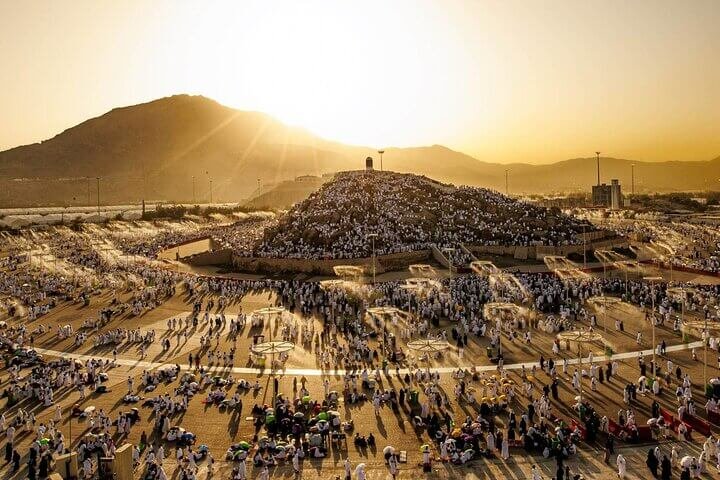
Masjid al Namirah, also widely known as Masjid Nimra or Masjid Namirah, is one of the most significant Islamic landmarks associated with the Day of Arafat. Located on the western edge of the plain of Arafat, near Wadi Uranah, the mosque marks the historic area where Prophet Muhammad ﷺ stayed and delivered his Farewell Sermon (Khutbat al-Wida) during his final pilgrimage.
Unlike ordinary mosques, Masjid al Namirah holds unique religious importance due to its direct connection to the core pillar of Hajj, the standing at Arafat (Wuquf). For this reason, understanding its location, boundaries, and rulings is essential for every pilgrim.
Historical Significance of Masjid Al Namirah
The Farewell Hajj and Khutbat al-Wida
During the Farewell Hajj in 10 AH, the Prophet ﷺ arrived at this area on the 9th of Dhul Hijjah. A tent was erected for him, with his family staying nearby. After the sun passed its zenith, he rode his she-camel al-Qaswa into Wadi Uranah, where thousands of companions gathered.
There, seated on his mount, the Prophet ﷺ delivered one of the most profound sermons in Islamic history-Khutbat al-Wida-laying down timeless principles of justice, equality, human dignity, and accountability before Allah. After leading the combined and shortened Dhuhr and Asr prayers, he proceeded deeper into the plain of Arafat to perform Wuquf, fulfilling the central rite of Hajj.
Masjid al Namirah stands as a living reminder of that moment.
Location and Arafat Boundary Explained
Masjid al Namirah is situated approximately 16–18 kilometers from Masjid al-Haram and close to Jabal al-Rahmah (Mount of Mercy). Its most defining feature is its position on the boundary between Arafat and Wadi Uranah.
Wadi Uranah and the Limits of Arafat
Islamic tradition clearly establishes that Wadi Uranah is not part of Arafat. The Prophet ﷺ stated that all of Arafat is a place of standing except the middle of Uranah. Because of this, the mosque is architecturally divided:
- The front section (mihrab and minbar area) lies in Wadi Uranah, outside Arafat.
- The rear section lies within the boundaries of Arafat.
Clear signboards inside the mosque guide pilgrims so they can ensure their Wuquf is valid.
Importance of Masjid Al Namirah During Hajj
Arafah Sermon and Combined Dhuhr–Asr Prayer
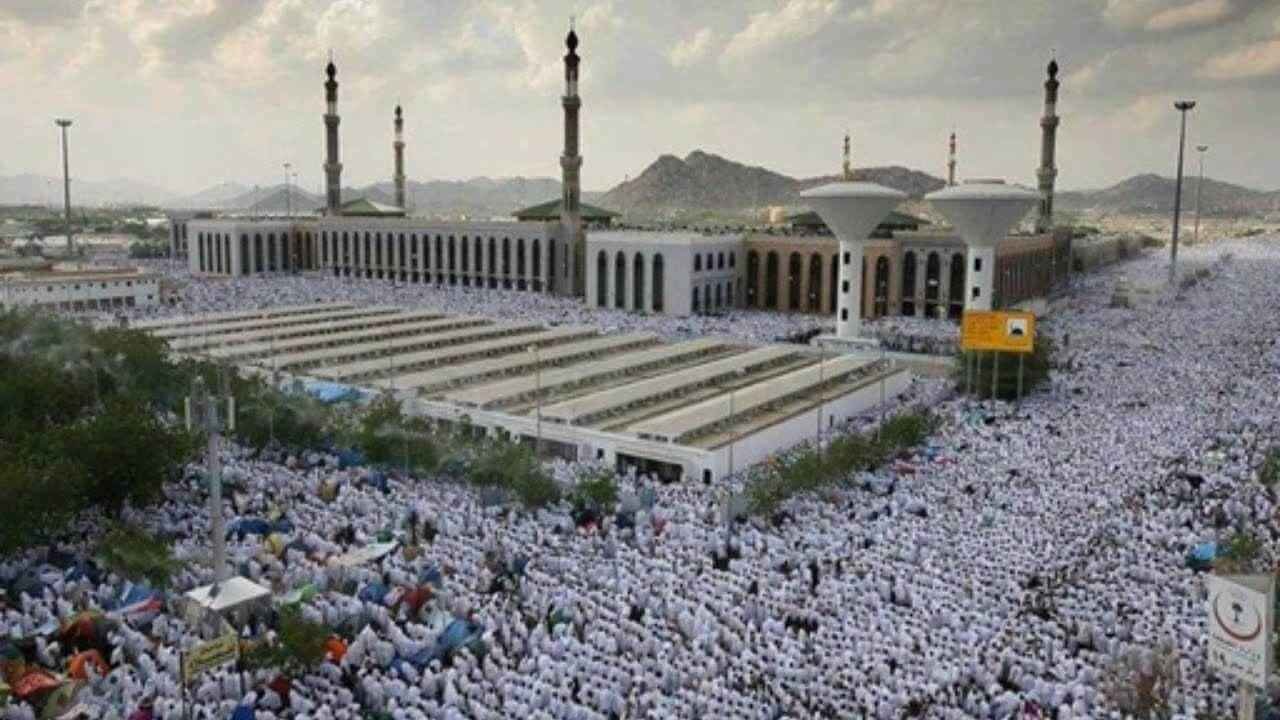
On the 9th of Dhul Hijjah, the Imam delivers the official Hajj sermon from Masjid al Namirah, followed by the combined and shortened Dhuhr and Asr prayers. This prayer gathering reflects the Sunnah of the Prophet ﷺ and serves as the spiritual preparation for Wuquf.
Wuquf Rules Every Pilgrim Must Understand
Wuquf must take place inside Arafat after midday and continues until dawn of the following day. While pilgrims may pray inside the mosque, they must ensure they move into the Arafat-marked section or outside into the plain before sunset. Remaining solely in the front portion invalidates the core pillar of Hajj.
Architecture, Capacity, and Modern Development
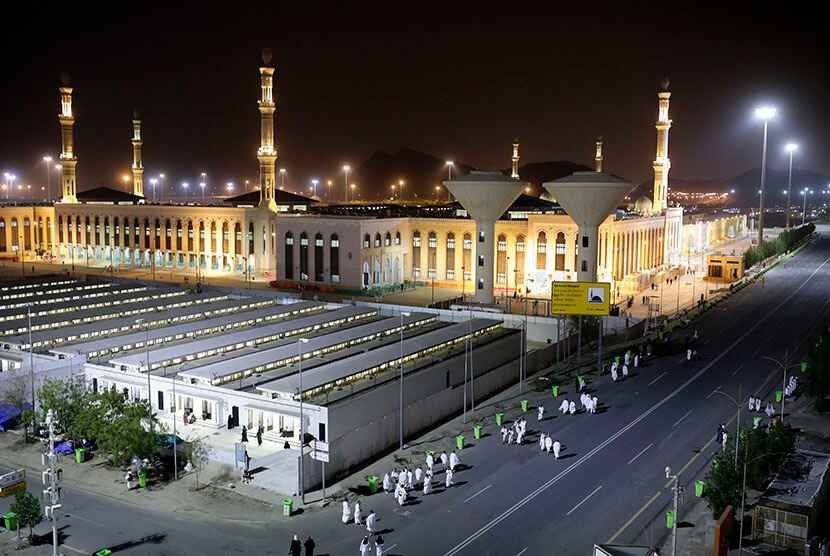
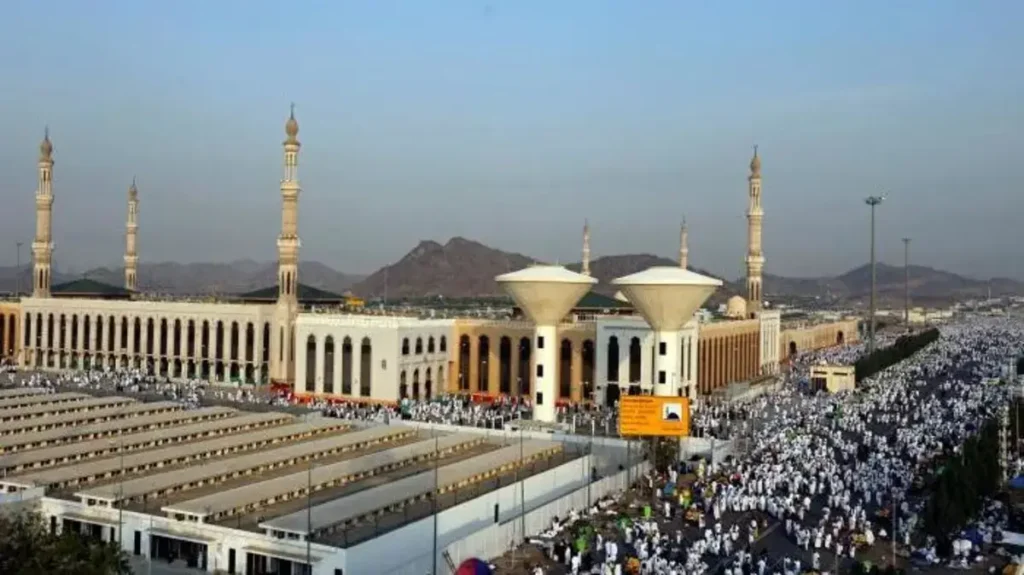
Originally built in the second century AH, Masjid al Namirah underwent multiple expansions across Abbasid, Mamluk, Ottoman, and Saudi eras. The most significant expansion occurred in modern Saudi Arabia, transforming it into one of the largest mosques in the region.
Today, the mosque spans over 110,000 square meters, with additional shaded areas and advanced cooling systems. It can accommodate approximately 350,000 to 400,000 worshippers, features six 60-meter minarets, multiple domes, dozens of entrances, and a dedicated broadcast facility to transmit the Arafah sermon worldwide.
Visiting Masjid Al Namirah – Practical Guidance
Outside of the Hajj season, Masjid al Namirah is generally closed, serving primarily as a historical landmark. During Hajj, pilgrims typically arrive early with their groups due to the immense crowds and heat. Carrying water, minimizing movement, and following group schedules helps preserve focus on supplication and remembrance.
Getting to Masjid Al Namirah from Makkah and Mina
During Hajj, pilgrims usually reach Arafat via organized buses or the Al-Mashaaer Al-Mugaddassah Metro, with Arafat stations located nearby. Outside Hajj, visitors exploring the Arafat area as part of a Ziyarat journey often travel by private transport.
For pilgrims and visitors seeking comfort and clarity, private taxi services from Jeddah to Makkah, Makkah Ziyarat taxis, and group transportation using Hiace, Coaster, or Bus offer a practical way to reach Arafat and surrounding sacred sites without stress, especially for families and elderly travelers.
Role of Masjid Al Namirah in Ziyarat and Islamic Learning
Even beyond Hajj, Masjid al Namirah remains a powerful educational symbol. Visiting its surroundings during Ziyarat helps pilgrims visualize the events of the Farewell Hajj and deepen their understanding of Islamic ethics and unity. Many visitors combine Arafat, Jabal al-Rahmah, and Mina in a single guided trip to experience the geography of Hajj meaningfully.
Conclusion
Masjid al Namirah is not merely a mosque-it is a cornerstone of Islamic history and Hajj ritual understanding. Its location, sermons, boundaries, and legacy directly shape the validity of one of Islam’s greatest acts of worship. For every pilgrim, understanding Masjid al Namirah means understanding the heart of the Day of Arafat itself.
Recommended Our Private Taxi Service
- Jeddah Airport Taxi Service
- Makkah to Madinah Taxi Service
- Madinah to Makkah Taxi Service
- Jeddah Airport to Madinah Taxi Service
FAQs
How far is Masjid al Namirah from Masjid al-Haram?
It is approximately 16–18 kilometers southeast of the Grand Mosque in Makkah.
Is Masjid al Namirah inside Arafat?
Only the rear portion lies within Arafat. The front section is in Wadi Uranah, outside the Arafat boundary.
Can Wuquf be done inside the mosque?
Yes, but only if you are in the clearly marked Arafat section or move into the plain of Arafat before sunset.
Is Masjid al Namirah open year-round?
No. It is generally opened only during the Hajj season, specifically on the Day of Arafat.
Can Umrah pilgrims visit Masjid al Namirah?
While Umrah does not include Arafat rituals, visitors may view the site externally or include it in a guided Ziyarat tour.