If you’re looking affordable private services in Saudi Arabia, contact Now for Umrah Taxi service.
Shuhada Uhud Cemetery Guide: History, Location, and Visiting the Martyrs of Uhud in Madinah


March 14, 2026
If you’re looking affordable private services in Saudi Arabia, contact Now for Umrah Taxi service.
Shuhada Uhud Cemetery is one of the most significant Islamic historical sites in Madinah. Located at the base of Mount Uhud, this sacred burial ground contains the graves of approximately seventy companions of Prophet Muhammad (peace be upon him) who were martyred during the Battle of Uhud.
The cemetery is often referred to as Uhud Martyrs Cemetery or Uhud Martyrs Square, and it forms part of the larger historical landscape surrounding Mount Uhud. For Muslims visiting Madinah for Umrah, Hajj, or Ziyarat, this site represents a place of reflection, remembrance, and gratitude for the sacrifices made by the early companions of Islam.
Among the martyrs buried here is the beloved uncle of the Prophet, Hamza ibn Abdul-Muttalib, who was given the title “Sayyid al-Shuhada” (Leader of the Martyrs).
The importance of Shuhada Uhud Cemetery comes from its connection to the Battle of Uhud, one of the most defining moments in early Islamic history. The battle took place in the third year after the Hijrah, when the Muslim community of Madinah faced an army from Makkah.
Although the Muslims initially had an advantage in the battle, a strategic mistake by some archers who left their defensive position allowed the opposing forces to attack from behind. The battle then turned difficult for the Muslim army, and many companions achieved martyrdom.
The martyrs were buried directly on the battlefield by the Prophet Muhammad (peace be upon him). They were buried in their blood-stained garments without being washed, honoring their sacrifice in the path of Allah.
The Prophet later visited the graves of the martyrs regularly and prayed for them, making it a respected Sunnah for Muslims to remember them during visits to Madinah.
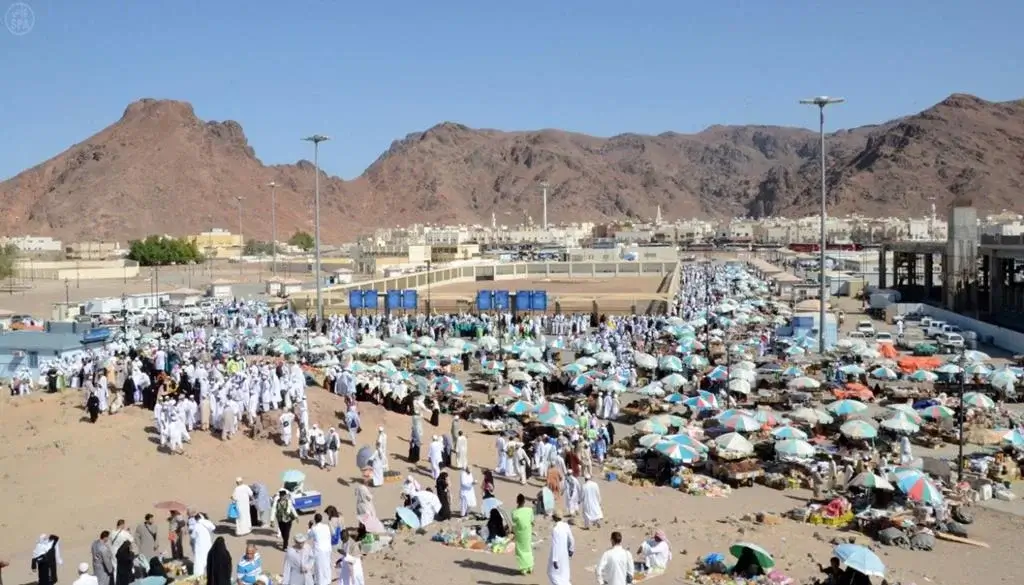
Shuhada Uhud Cemetery is located in the Sayyid al-Shuhada district of Madinah, roughly 3.5 to 5 kilometers north of Masjid an-Nabawi.
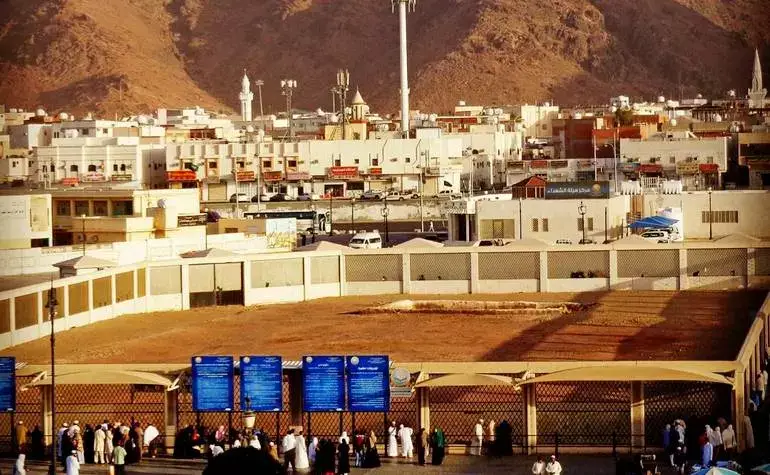
The cemetery sits directly at the foot of Mount Uhud, making it easy to identify during a visit. Today the area has been developed into a large historical square with improved walkways, parking areas, visitor facilities, and organized access points for pilgrims.
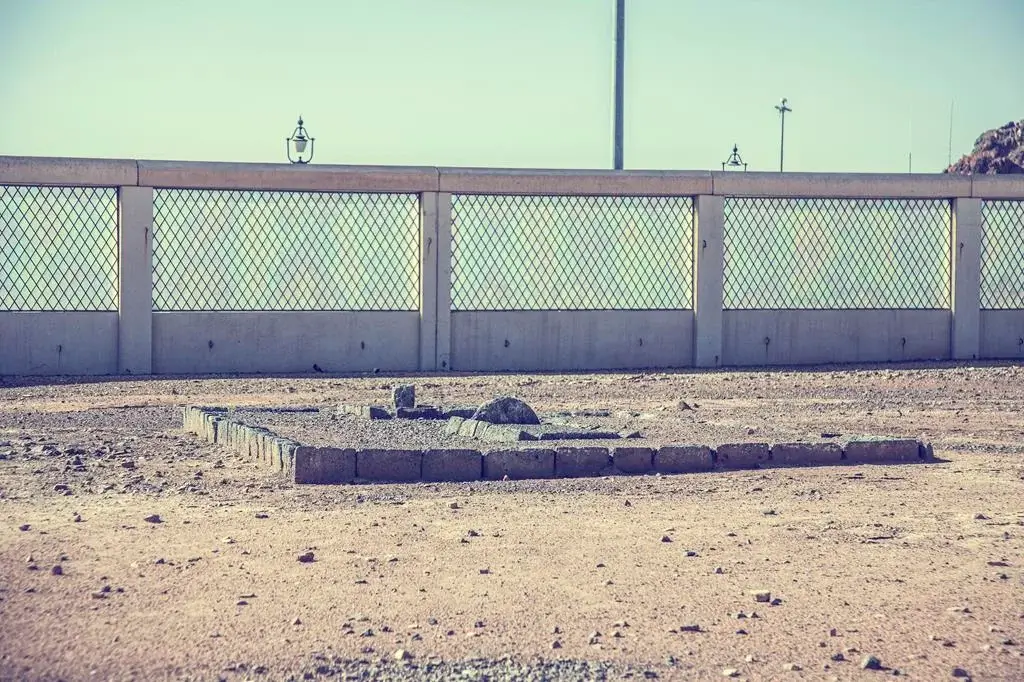
Several important Islamic historical landmarks surround the cemetery, making the area a major stop during Madinah Ziyarat tours.
Mount Uhud
Mount Uhud rises behind the cemetery and is one of the most famous mountains in Islamic history. The battle that took place here was named after this mountain, and it remains a powerful symbol of sacrifice and perseverance.
Archers’ Hill (Jabal al-Rumah)
Located opposite the cemetery, this small hill was the strategic position where the Prophet placed a group of archers to protect the Muslim army during the battle. From its summit, visitors can clearly see the battlefield layout, the cemetery, and Mount Uhud.
Sayed Al-Shuhada Mosque
A large mosque built near the cemetery allows visitors to pray during their visit. The mosque can accommodate thousands of worshippers and serves pilgrims visiting the Uhud historical area.
The Battle of Uhud occurred between the Muslims of Madinah and the Quraysh army from Makkah. It followed the earlier Muslim victory at the Battle of Badr and was partly a response from the Quraysh seeking revenge.
At the beginning of the battle, the Muslims gained the upper hand. However, when some archers left their assigned hill position before receiving permission, the opposing army launched a surprise attack from the rear. This sudden shift led to intense fighting and the martyrdom of many companions.
Despite the losses, the battle taught important lessons about discipline, obedience, and patience.
Hamza ibn Abdul-Muttalib was among the bravest warriors of the early Muslim community. Known for his courage and strength, he fought heroically in the Battle of Badr and again at Uhud.
During the battle, a skilled spearman named Wahshi struck Hamza with a spear from a distance, leading to his martyrdom. The Prophet Muhammad (peace be upon him) was deeply saddened by the loss of his beloved uncle.
Hamza was buried in the Uhud battlefield and became known as Sayyid al-Shuhada, the leader of the martyrs.
Several prominent companions were also buried in the cemetery, including:
Mus’ab ibn Umair, who carried the banner of the Muslim army and continued holding it even after severe injuries until he was martyred.
Abdullah ibn Jahsh, a courageous companion who fought bravely in the battle.
Hanzala ibn Abi Amir, remembered as “Ghaseel al-Malaaika” (the one washed by the angels) because the Prophet explained that angels purified him after his martyrdom.
Altogether, around seventy companions were honored with martyrdom during this historic battle.
Today, the graves of the martyrs are enclosed within a protected cemetery area. Visitors cannot enter the graveyard itself, but they can stand outside the boundary and see the burial area.
The most prominent grave inside the cemetery is that of Hamza ibn Abdul-Muttalib.
The surrounding square includes walking paths, historical plaques explaining the events of the battle, and designated viewing points.
The site is generally open during daytime hours and is accessible without an entrance fee. While some listings suggest round-the-clock access, it is usually best to visit during daylight when facilities and security services are present.
Visitors typically spend time standing near the cemetery fence offering prayers for the martyrs. Information boards around the square explain the history of the Battle of Uhud and the companions who were martyred there.
Many visitors also walk toward Archers’ Hill to observe the battlefield from above and better understand how the battle unfolded.
Because the cemetery is a sacred historical site, visitors are expected to behave respectfully.
Pilgrims should dress modestly and maintain a calm and reflective attitude during their visit. Loud conversations or disruptive behavior should be avoided.
Visitors may offer prayers for the martyrs, remembering their sacrifice and asking Allah to grant them the highest ranks in Paradise. However, Islamic teachings emphasize that supplications should be directed only to Allah rather than to the martyrs themselves.
Acts such as leaving objects at the graves, tying threads, or performing ritual actions around the cemetery are not part of Islamic practice.
Mount Uhud stretches several kilometers across the northern side of Madinah. The mountain forms a natural backdrop to the cemetery and remains one of the most visited historical locations in the city.
Climbing the small Archers’ Hill provides a panoramic view of the entire battlefield area. From here, visitors can see exactly where the Muslim archers were positioned during the battle.
The nearby mosque is a modern structure built to serve visitors and pilgrims. Many pilgrims stop here to perform two rak‘ahs of prayer before or after visiting the cemetery.
Since the cemetery is only a short distance from Masjid an-Nabawi, it is usually included in most Madinah Ziyarat tours.
Pilgrims commonly travel here by private car, taxi, or organized group transport. Visitors staying in Madinah hotels often combine their visit to Uhud with other historical sites in the city.
For pilgrims arriving from other cities, many travelers book private transport services for convenience and comfort. A dedicated Madinah Ziyarat taxi allows visitors to explore historical locations like Mount Uhud, Quba Mosque, and other landmarks at their own pace.
Families and small groups often prefer vehicles such as Hyundai Staria or Toyota Hiace, while larger pilgrimage groups may use Coaster or Bus transportation for their Ziyarat tours.
Pilgrims traveling from Makkah or Jeddah can also arrange intercity transfers such as a Jeddah to Makkah taxi or private transport between Makkah and Madinah before visiting the historical sites of Madinah.
A visit to Shuhada Uhud Cemetery is not simply a historical tour. For many Muslims, it is an opportunity to reflect on the courage, faith, and sacrifice of the companions who gave their lives defending the early Muslim community.
Standing at the foot of Mount Uhud and remembering the events of the battle helps visitors understand the struggles faced by the first generation of Muslims. The lessons of discipline, loyalty, and patience continue to inspire believers around the world.
Shuhada Uhud Cemetery remains one of the most important historical and spiritual landmarks in Madinah. Located near Mount Uhud and only a short distance from Masjid an-Nabawi, it preserves the memory of the companions who were martyred in the Battle of Uhud.
For pilgrims visiting Madinah, the site offers a powerful reminder of the sacrifices made in the early days of Islam. Combined with nearby landmarks such as Archers’ Hill and Sayed Al-Shuhada Mosque, the area forms an essential stop during any Madinah Ziyarat journey.
Visiting the cemetery with respect and understanding allows pilgrims to connect with Islamic history while reflecting on the values of faith, courage, and devotion.
Shuhada Uhud Cemetery is located about 3.5–5 kilometers north of Masjid an-Nabawi in Madinah, at the base of Mount Uhud in the Sayyid al-Shuhada district.
Around seventy companions of Prophet Muhammad (peace be upon him) who were martyred during the Battle of Uhud are buried at the site.
Visitors cannot enter the graveyard itself. The graves are enclosed within a protected area, and visitors can view them from outside the fence.
No, the site is open to visitors and pilgrims free of charge.
Early morning or late afternoon is generally the best time to visit, especially during warmer months, as the weather is more comfortable and the area is less crowded.