If you’re looking affordable private services in Saudi Arabia, contact Now for Umrah Taxi service.
Talbiyah Umrah Guide: Meaning, Arabic Text, When to Recite & Common Mistakes


February 11, 2026
If you’re looking affordable private services in Saudi Arabia, contact Now for Umrah Taxi service.
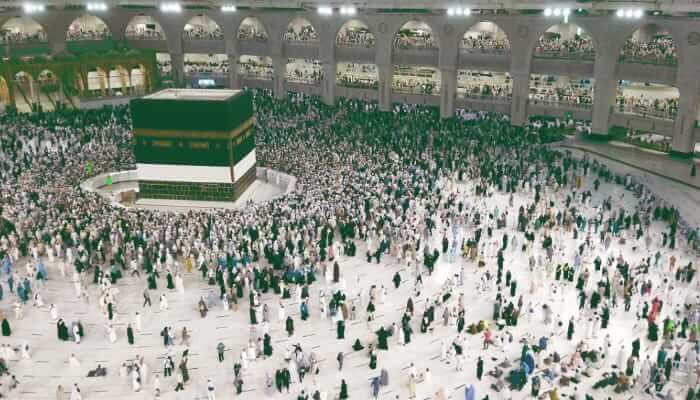
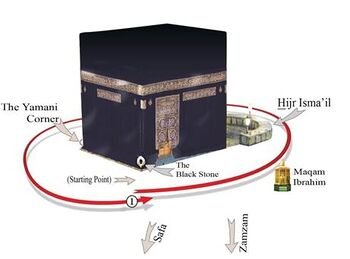
Tawaf refers to the act of circumambulating the Holy Kaaba seven times in an anti-clockwise direction within Masjid al-Haram in Makkah. Linguistically, the word comes from the Arabic root “taafa,” meaning to walk around or encircle. In Islamic practice, each complete circle around the Kaaba is known as a shawt, and seven shawts together form one Tawaf.
Tawaf is not merely movement; it is an act of worship performed with intention, humility, and remembrance of Allah.
Tawaf is the heart of Umrah and one of the core pillars of Hajj. Without it, the pilgrimage remains incomplete. Spiritually, Tawaf symbolizes absolute devotion to Allah, where the believer revolves around a single divine center, just as the universe revolves within Allah’s command.
As millions of pilgrims from different cultures, languages, and backgrounds move together around the Kaaba, Tawaf becomes a powerful expression of unity, equality, and submission. It reminds the believer that Allah is the center of life, and everything else revolves around Him.
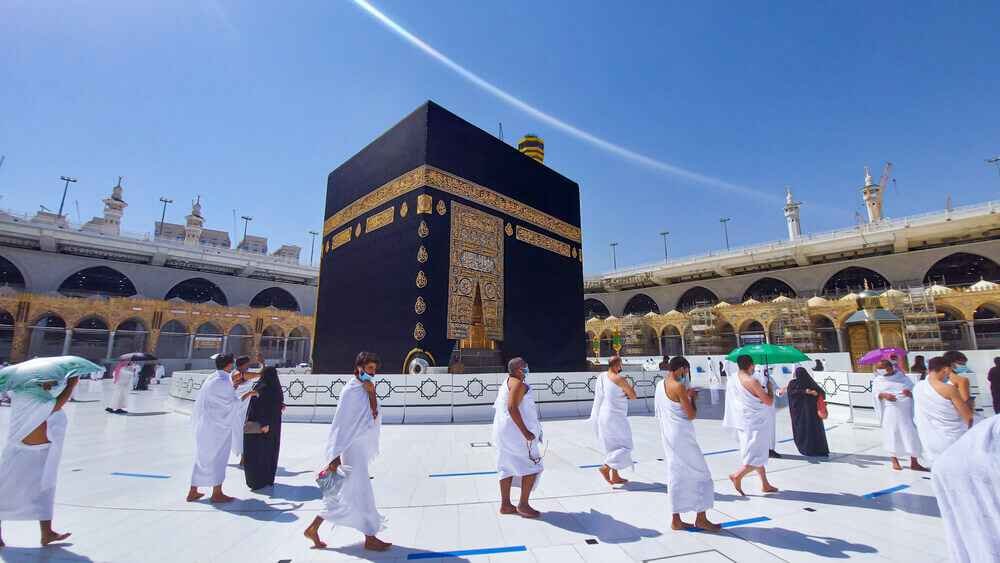
There are several recognized forms of Tawaf, each with a specific purpose:
Recommended: What Is Inside the Kaaba?
Before entering the Mataaf area, certain conditions must be fulfilled. A pilgrim must be in a state of Wudu, wear proper Ihram, and ensure that the Awrah is covered according to Islamic guidelines. Intention (Niyyah) is made silently in the heart, as Tawaf is an act of worship that begins with conscious purpose.
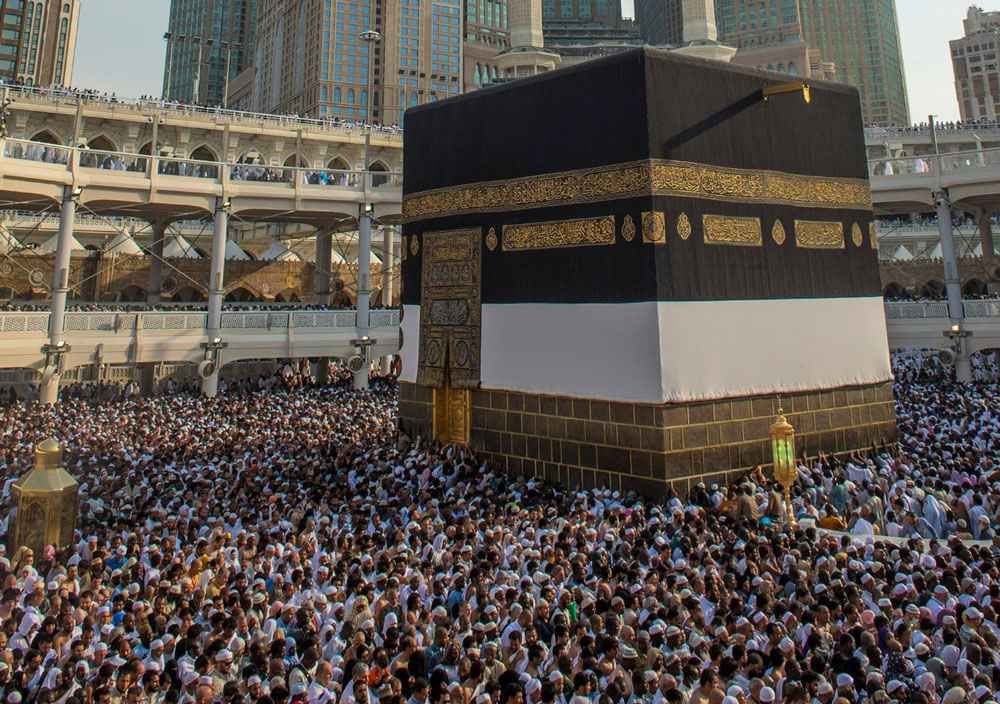
Tawaf begins at the Black Stone (Hajar al-Aswad), located at the eastern corner of the Kaaba. Green lights indicate its alignment. Facing the Kaaba, the pilgrim makes intention and starts Tawaf by raising the right hand toward the Black Stone and saying “Allahu Akbar.” Kissing the stone is Sunnah if possible without harm.
Pilgrims walk anti-clockwise, keeping the Kaaba on their left. Each circuit starts and ends at Hajar al-Aswad. The semi-circular area known as Hateem (Hijr Ismail) must be walked around, not through, as it is part of the Kaaba.
During Tawaf al-Umrah, men uncover the right shoulder (Idtiba) and walk briskly during the first three rounds (Ramal), if crowd conditions allow. Women walk normally throughout.
At the Rukn al-Yamani, touching the corner is Sunnah if possible. Between this corner and the Black Stone, pilgrims commonly recite:
“Rabbana atina fid-dunya hasanah wa fil-akhirati hasanah wa qina ‘adhaban-nar.”
There are no fixed duas for each round of Tawaf. Pilgrims may recite Quran, engage in dhikr, or make personal supplications in any language. The emphasis is on sincerity, presence of heart, and remembrance of Allah rather than memorization.
After the seventh circuit, pilgrims perform two Rak’ahs of prayer, preferably behind Maqam Ibrahim if space permits. Following this, drinking Zamzam water and making dua is recommended before proceeding to Sa’i.
Pilgrims should avoid loud recitation, pushing others, engaging in worldly conversations, using mobile phones unnecessarily, or conducting trade. Cutting through the Hateem invalidates a circuit. Tawaf should be performed calmly, with respect for others and focus on worship.
Tawaf can be performed at any time, day or night. However, early morning or late night hours are often less crowded, especially for elderly pilgrims or families. Proper planning reduces physical strain and allows greater spiritual focus.
Smooth transportation plays a key role in a stress-free Umrah experience. Many pilgrims traveling from Jeddah Airport to Makkah prefer private taxis for comfort after long flights. Similarly, planning Makkah and Madinah Ziyarat trips becomes easier with reliable private transport, especially for families and groups using vehicles like Hiace, Coaster, or Bus. Convenient travel allows pilgrims to conserve energy for Tawaf and other rituals.
Tawaf is far more than circling the Kaaba; it is a deeply spiritual act that reflects submission, unity, and devotion to Allah. Understanding its meaning, rules, and wisdom helps pilgrims perform it correctly and with presence of heart. When approached with knowledge and sincerity, Tawaf becomes a life-changing moment in the Umrah journey.
Recommended Our Private Taxi Service
How many rounds are required in Tawaf?
Seven complete circuits around the Kaaba are required for one Tawaf.
Is Tawaf mandatory in Umrah?
Yes, Tawaf al-Umrah is a compulsory pillar, and Umrah is incomplete without it.
Can I make personal duas during Tawaf?
Yes, personal supplications in any language are allowed and encouraged.
What happens if I lose count during Tawaf?
If unsure, assume the lower number and complete the remaining rounds.
Is Tawaf al-Wada required for Umrah?
It is required for pilgrims leaving Makkah, except residents of the city.