
Madinah Ziyarat: The Complete List of Places to Visit and Plan Your Trip
Most pilgrims arrive in Madinah with one plan: pray at Masjid an-Nabawi, visit the Rawdah, and send salam to the Prophet Muhammad ﷺ. That part is simple. What catches people off guard is everything else – the dozen or so historic mosques, battlefields, and cemeteries scattered across the city that together make up what’s known as Madinah Ziyarat.
Unlike Makkah, where most sacred sites sit within the Haram complex itself, Madinah’s Ziyarat places are spread out – some 3 kilometers away, others closer to 7 or 8. You can’t walk to all of them, especially not in Madinah’s heat, and especially not with elderly parents or young children in tow. That’s really the whole reason a Ziyarat tour exists as a category of travel: it turns a scattered list of holy sites into one organized, comfortable half-day or full-day trip.
This guide walks through every major Ziyarat location in Madinah, how far each one actually is, what you’ll see when you get there, and how to plan the visit so it feels unhurried rather than rushed.
What Does “Ziyarat” Actually Mean?

Ziyarat is an Arabic word that simply means “a visit.” In the context of Madinah, it refers to visiting places tied to the life of the Prophet Muhammad ﷺ, his companions (Sahabah), his family (Ahl al-Bayt), and the early events that shaped Islamic history – battles, migrations, mosques, and burial grounds.
It’s worth being clear about one thing scholars consistently emphasize: Ziyarat is not an act of worship in itself, and it isn’t a substitute for Umrah or Hajj. Pilgrims don’t ask anyone buried at these sites for help or blessings – that would contradict Tawheed. Instead, Ziyarat is a form of reflection: standing where a battle was fought, where a mosque’s Qibla was changed by revelation, or where thousands of companions are buried, and drawing a lesson from it. The Prophet ﷺ is reported to have said, “Whoever visits me after my death, it is as if he visited me during my lifetime” (Musnad Ahmad), which is part of why the practice carries such emotional weight for pilgrims.
Masjid an-Nabawi: Where Every Ziyarat Begins

Every Madinah Ziyarat itinerary starts at the same place: Masjid an-Nabawi, the Prophet’s Mosque, built by Muhammad ﷺ himself in 622 CE after the migration (Hijrah) from Makkah. It’s the second holiest site in Islam after Masjid al-Haram, and it holds three things pilgrims come specifically to experience:
- The Rawdah (Riyad ul-Jannah) – the area between the Prophet’s tomb and his pulpit, described in Hadith as “a garden from the gardens of Paradise.” Since the introduction of the Nusuk app’s booking system, entry to the Rawdah requires a pre-reserved time slot rather than a walk-in visit.
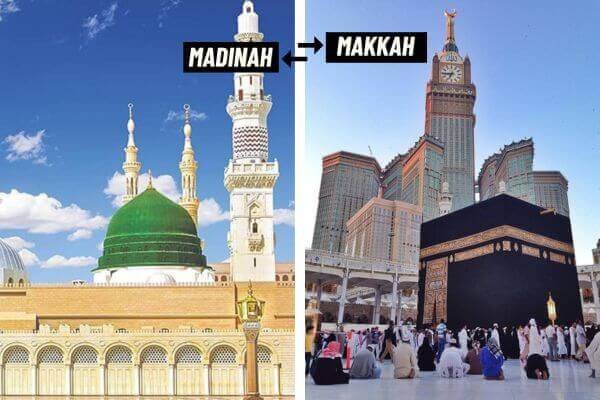
- The Green Dome (Hujrah al-Sharifah) – beneath it lie the graves of the Prophet Muhammad ﷺ, Abu Bakr, and Umar ibn al-Khattab.
- Jannat al-Baqi – the historic cemetery directly beside the mosque, holding the graves of many of the Prophet’s family members and companions, including his daughter Fatimah and grandson Hasan.
Booking the Rawdah Through Nusuk
Because demand for the Rawdah far exceeds its physical capacity, visits are now managed entirely through the Nusuk app (the official platform of Saudi Arabia’s Ministry of Hajj and Umrah). A few practical points worth knowing before you land in Madinah:
- Men and women use separate booking categories with different visiting hours and entry gates.
- Standard bookings are generally limited to once every 365 days per person, though an “instant booking” feature sometimes allows same-day slots when you’re physically near the mosque and capacity allows.
- Each visitor, including children in some cases, typically needs their own permit – one adult can’t book for the whole family under a single slot.
- Slots tend to release in batches, so checking the app daily (especially after arrival) improves your chances.
- Once inside, visits are brief – guards typically move pilgrims through within 10–15 minutes given the volume of people waiting.
If the Rawdah is a priority for your trip, it’s worth handling the Nusuk booking within the first day or two of arriving in Madinah, since slots can fill quickly during Ramadan, Hajj season, and school holiday periods.
The Full List of Ziyarat Places in Madinah
Beyond Masjid an-Nabawi, Madinah has more than 30 recognized Ziyarat sites, though most guided tours focus on a core group of 10–15 that carry the most historical weight. Here’s the full picture, organized by how they’re usually grouped on a tour route.
1. Masjid Quba – The First Mosque in Islam

Distance from Masjid an-Nabawi: roughly 3.5–4 km (about 10–15 minutes by taxi, 45–55 minutes on foot).
Masjid Quba holds a unique distinction: it’s the first mosque ever built in Islam, with its foundation laid by the Prophet ﷺ himself upon arriving in Madinah. A well-known Hadith states that performing two rak’ahs here carries the reward of an Umrah, which is why it’s one of the most visited sites on any Ziyarat itinerary – pilgrims often go specifically to pray there rather than just view it. A paved walking track connects Masjid Nabawi directly to Quba for those who want to make the walk itself part of the experience, though most families and older pilgrims prefer a taxi given the heat.
2. Masjid Qiblatain – The Mosque of Two Qiblas

A short distance from Quba, Masjid Qiblatain marks the spot where the Qibla direction changed mid-prayer from Jerusalem to the Kaaba in Makkah, following a Quranic revelation. It’s architecturally distinctive for having two mihrabs (prayer niches) – one for each original direction – making it one of the more visually memorable stops for first-time visitors.
3. Jannat al-Baqi – The Garden of Heaven

Located immediately beside Masjid an-Nabawi, Jannat al-Baqi is Madinah’s largest and most significant cemetery, holding the graves of thousands of companions, family members of the Prophet ﷺ, and early Islamic figures. Visiting hours are limited and it’s typically only open briefly after certain prayers, so it’s worth checking current timing on arrival rather than assuming it’s accessible all day.
4. Mount Uhud and the Martyrs’ Cemetery

Distance from Masjid an-Nabawi: roughly 6–7 km north of the city.
Uhud is the site of one of the most significant battles in early Islamic history, where 70 companions – including Hamza ibn Abdul-Muttalib, the Prophet’s uncle – were martyred. The mountain itself, the Archers’ Hill (where a small group of archers were positioned during the battle), and the adjacent martyrs’ cemetery are all part of the visit. It’s one of the more emotionally resonant stops on the Ziyarat route, and guides typically spend extra time here explaining the sequence of events.
5. The Seven Mosques (Masajid al-Sab’ah)

A cluster of small historic mosques marking the positions companions held during the Battle of the Trench (Ghazwat al-Khandaq), when Madinah was defended against a coalition of tribes by digging a defensive trench around the city. The mosques are close together and usually visited as a single stop rather than individually.
6. Masjid Ghamama

Marks the spot where the Prophet ﷺ is said to have prayed the Eid prayer. It sits within a few kilometers of Masjid Nabawi and is commonly folded into the same route as Masjid Jumu’ah.
7. Masjid Jumu’ah

The site associated with the first congregational Friday prayer led by the Prophet ﷺ after his migration to Madinah – a meaningful stop for anyone interested in the earliest days of the Muslim community in the city.
8. Masjid al-Ijabah (The Mosque of the Answered Prayer)

Named for a tradition that the Prophet ﷺ made three specific supplications here, two of which were granted. It’s roughly 5 km from Masjid Nabawi and often included alongside Ghamama and Jumu’ah in a single loop.
9. Masjid al-Miqat (Masjid Fajr / Masjid Banu Unaif)
Marks the location where the Prophet ﷺ prayed his first Fajr prayer upon entering Madinah – a smaller, quieter stop that many first-timers haven’t heard of before booking a tour.
10. The Well of Uthman ibn Affan (Bir Uthman) and the Well of Ghars

Located roughly 4–5 km from Masjid Nabawi, these wells are tied to two different stories: Bir Uthman represents one of the earliest and most significant waqf (charitable endowment) acts in Islamic history, while the Well of Ghars is associated with the Prophet ﷺ drinking from and performing wudu with its water.
Beyond the Core List
Depending on your guide, time available, and personal interest, a fuller Ziyarat route can also include Khyber Fort (further out, tied to a significant early military campaign), Badr’s battlefield (a longer trip, roughly on the road toward Makkah), and various smaller sites tied to specific companions such as Abu Bakr and Ali. These aren’t part of a typical half-day tour but are worth asking about if you have extra time in Madinah.
How Long Does a Ziyarat Tour Take?
This depends entirely on how many stops you include and how much time you spend reflecting at each one rather than just viewing it from outside.
| Tour Type | Duration | Typical Stops Covered |
|---|---|---|
| Short/Express Tour | 2–3 hours | Quba, Qiblatain, one or two nearby mosques |
| Half-Day Tour | 3–5 hours | Quba, Qiblatain, Uhud, Seven Mosques |
| Full-Day Tour | 6–8 hours | All of the above plus wells, Ghamama, Jumu’ah, Ijabah, extra time at Uhud |
Families traveling with elderly parents or young children generally do better with a half-day tour split across two mornings rather than trying to cover everything in one long, hot afternoon.
Getting Around: Taxi Fares and Travel Times
Because most Ziyarat sites sit outside comfortable walking range, private taxi is by far the most practical way to see them – particularly for families, elderly pilgrims, and anyone visiting during summer heat. Public buses run to some sites, such as Quba, at a lower cost, but expect multiple stops and longer wait times.
| Route | Approx. Distance | Taxi Time | Typical Fare (Point-to-Point) |
|---|---|---|---|
| Masjid Nabawi → Masjid Quba | 3.5–4 km | 10–15 min | SAR 15–30 |
| Masjid Nabawi → Masjid Qiblatain | ~4–5 km | 10–15 min | SAR 15–30 |
| Masjid Nabawi → Mount Uhud | 6–7 km | 15–20 min | SAR 30–50 |
| Masjid Nabawi → Seven Mosques | ~5 km | 10–15 min | SAR 20–35 |
For a multi-stop private Ziyarat tour rather than a single point-to-point ride, most licensed operators structure pricing by tour length rather than by distance:
- Half-day Ziyarat tour: roughly SAR 150–250, typically covering 4–6 major sites with waiting time built in at each stop.
- Full-day Ziyarat tour: roughly SAR 300–500, covering the fuller list including wells and smaller mosques, with a relaxed pace and no rushing between stops.
These figures are general market ranges rather than fixed pricing, since fares vary by vehicle type, group size, season, and whether the driver waits at each stop or drops and returns.
Choosing the Right Vehicle for Your Group
The right vehicle depends mostly on group size and how much comfort your travelers need:
- Sedan (Toyota Camry or similar): Best for solo travelers, couples, or small families of 2–3 with light luggage.
- Family SUV (GMC Yukon or similar): A comfortable option for families of 4–6, especially with elderly parents who need easier entry and exit.
- Van (Hyundai Staria or Toyota Hiace): Suited to larger families or small groups of 6–8, common for multi-generational Ziyarat trips.
- Coaster Bus: Used for larger groups traveling together, such as Umrah groups or extended family gatherings of 15+.
A private, licensed driver who’s used to Ziyarat routes also tends to know practical details a standard taxi driver might not – where to park near Uhud, which gate to use for Jannat al-Baqi’s limited visiting hours, and how to time the route around prayer times so you’re not stuck waiting outside a closed mosque.
Practical Tips for a Smoother Ziyarat Experience
Timing around prayers. Several Ziyarat sites, including Jannat al-Baqi, have restricted visiting windows tied to prayer times. Building your route around these windows – rather than trying to see everything back-to-back – avoids arriving somewhere just as it closes.
Heat management. Madinah’s midday heat, especially between April and September, makes early morning (after Fajr) or late afternoon the more comfortable windows for outdoor sites like Uhud and the Seven Mosques. Carry water regardless of the season.
Modest dress. As with any visit to a mosque or sacred site in Saudi Arabia, modest clothing – long sleeves and full-length pants or a skirt – is expected for both men and women.
Elderly and accessibility needs. If traveling with elderly parents or anyone with mobility limitations, mention this when booking your taxi or tour. Drivers who regularly handle Ziyarat routes can plan drop-off points closer to entrances and pace the day with more rest stops.
Family and children. For younger children, a shorter route (2–3 stops) tends to hold their attention better than a full-day tour. Some families split the full list across two separate mornings rather than one long day.
Photography etiquette. Photography is restricted or discouraged inside several mosques and around the Rawdah specifically. It’s worth checking current signage at each site rather than assuming photos are allowed everywhere.
Ramadan and Hajj season. Both periods bring significantly higher pilgrim volumes to Madinah. Booking a private tour in advance – rather than arranging one last-minute at the mosque gates – becomes far more important during these windows.
Ziyarat in Makkah vs. Madinah: What’s the Difference?
Pilgrims sometimes assume Ziyarat is a single, uniform experience across both holy cities, but the two differ in an important way. In Makkah, most Ziyarat sites – Jabal al-Nour (Cave of Hira), Jabal Thawr (Cave of Thawr), Mina, Muzdalifah, and Arafat – are tied to the Hajj rites themselves and the earliest moments of the Prophet’s ﷺ mission. In Madinah, the sites are more focused on his life after migration: governance, community-building, and the battles fought in defense of the city. Many pilgrims choose to book Ziyarat taxi services separately for each city rather than assuming one driver or tour covers both, since Makkah to Madinah is roughly a 420 km trip on its own (about 2–2.5 hours by Haramain high-speed train, or 5–6 hours by road).
FAQs
How many Ziyarat places are there in Madinah?
There are more than 30 recognized Ziyarat sites in and around Madinah, though most guided tours focus on 10–15 of the most historically significant ones.
How long does a Madinah Ziyarat tour take? Typically 2–8 hours depending on how many stops you include. A focused half-day tour covering the main sites usually takes 3–5 hours.
Do I need to book Rawdah separately from my Ziyarat tour?
Yes. The Rawdah is inside Masjid an-Nabawi and requires its own appointment through the Nusuk app, separate from any private Ziyarat taxi tour that covers Quba, Uhud, and the other outer sites.
Can I walk to Masjid Quba instead of taking a taxi?
Yes, a paved walking track connects Masjid Nabawi to Quba, roughly 3.5–4 km, taking 45–55 minutes on foot. Many pilgrims do this as an act of devotion, but it’s not recommended during peak heat or for elderly travelers.
Is Ziyarat mandatory as part of Umrah or Hajj?
No. Ziyarat is recommended (Mustahabb) but not obligatory. It’s considered a means of reflection and remembrance rather than a ritual requirement of Umrah or Hajj.
What’s included in a typical half-day Ziyarat tour?
Most half-day tours cover Masjid Quba, Masjid Qiblatain, Mount Uhud, and the Seven Mosques, with waiting time at each stop.
Are Ziyarat places open to women?
Yes, the majority of Ziyarat sites are open to both men and women, though the Rawdah has separate booking categories and visiting hours by gender.
What should I wear for a Ziyarat tour?
Modest clothing is expected throughout – long sleeves and full-length pants or a skirt for both men and women, along with comfortable walking shoes.
Is it better to book a private taxi or join a group tour?
A private taxi offers more flexibility around timing, prayer breaks, and pace – particularly useful for families and elderly pilgrims – while group tours can be more cost-effective for solo travelers.
How far is Mount Uhud from Masjid Nabawi?
Roughly 6–7 km, about 15–20 minutes by taxi.
Can children join a Ziyarat tour?
Yes, though a shorter route with fewer stops generally works better for younger children than a full-day itinerary.
What’s the best time of day for a Ziyarat tour?
Early morning after Fajr is generally the most comfortable, especially during warmer months, since several stops involve walking outdoors.
Do Ziyarat sites charge entry fees?
No, the Ziyarat sites themselves are free to visit. Any cost involved is for transportation, not entry.
Is Jannat al-Baqi open all day?
No, visiting hours are limited and tied to specific times, generally after certain prayers. It’s worth checking current timing on arrival rather than assuming all-day access.
Planning Your Visit
A Madinah Ziyarat trip works best when it’s planned rather than pieced together on the spot. Deciding in advance how many days you have, whether you’re traveling with elderly family members or young children, and whether the Rawdah is a priority (which means an early Nusuk booking) will shape everything else about your route.
For pilgrims arriving through Jeddah, it’s worth noting that Madinah has its own airport – Prince Mohammad Bin Abdulaziz International Airport (MED) – so many visitors fly directly into Madinah first and continue to Makkah afterward via road or the Haramain train, rather than approaching it the other way around.
Whether you’re looking at a short two-hour visit to Quba and Qiblatain or a full-day route covering every corner of the city’s Islamic history, the practical part – getting there comfortably, on time, and without the heat or logistics wearing your group down – is where a private Ziyarat taxi tends to make the biggest difference to how the day actually feels.