Safa and Marwa

Safa and Marwa: The Complete Guide to History, Meaning, and How to Perform Sa’i

If you are preparing for Umrah or Hajj, you have almost certainly heard the names Safa and Marwa. They are two small hills inside Masjid al-Haram in Makkah, and walking between them – a ritual called Sa’i – is one of the most physically and spiritually significant acts a pilgrim performs. This guide explains what Safa and Marwa are, why they matter, the story behind them, and exactly how to perform Sa’i correctly, along with practical travel advice for reaching Makkah from Jeddah, Madinah, or any other city.

What Are Safa and Marwa?

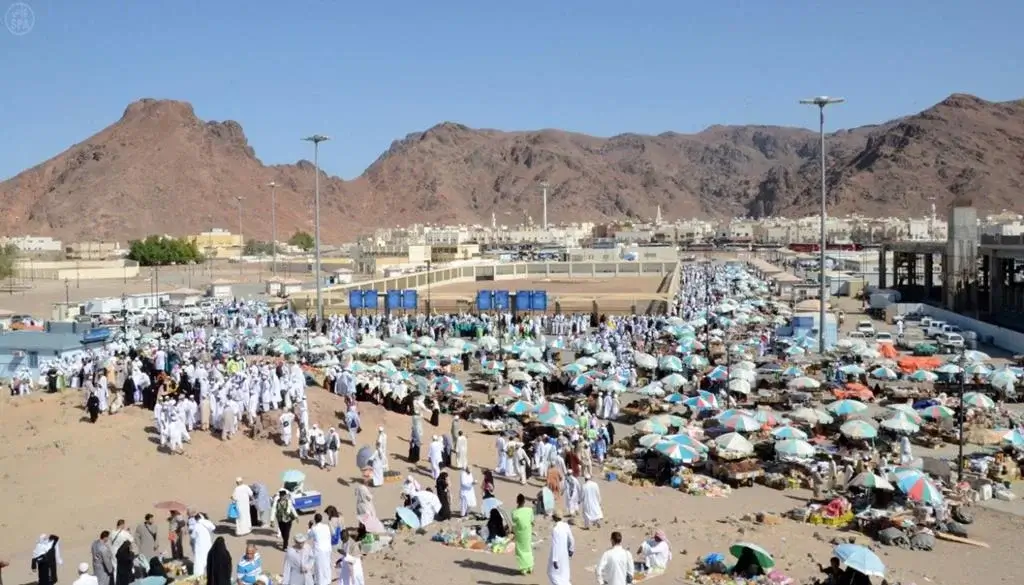
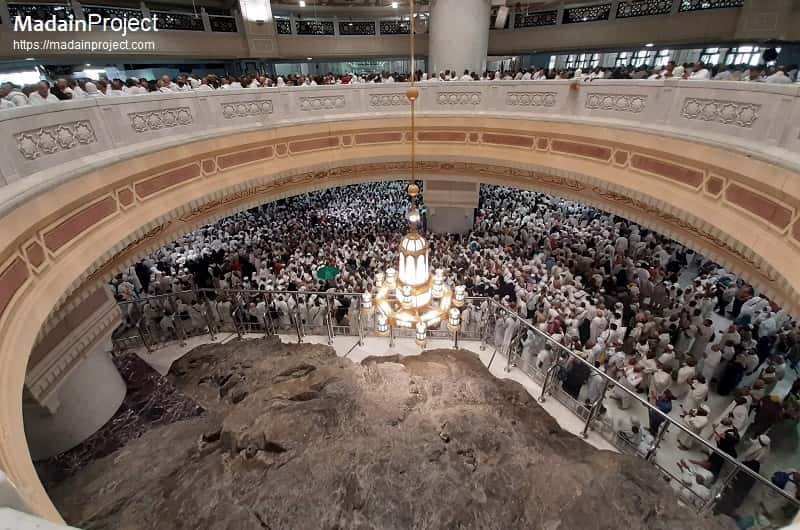
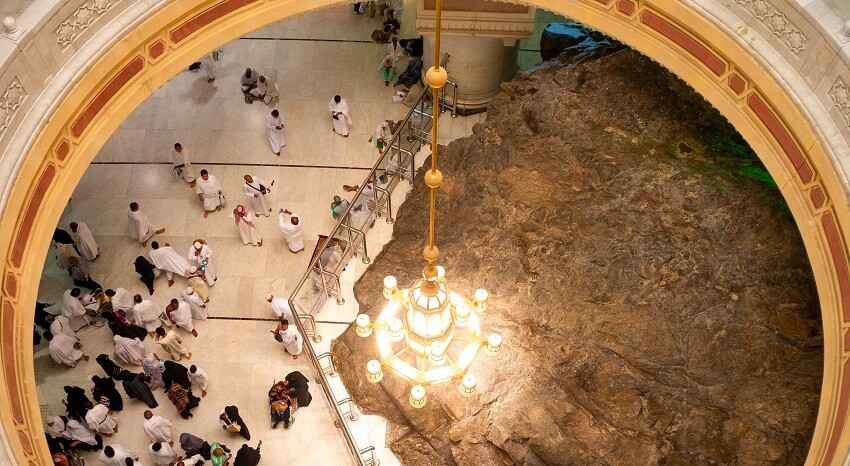
Safa and Marwa are two small rocky hills located inside the grounds of Masjid al-Haram, the Grand Mosque of Makkah, close to the Kaaba. Safa sits near the base of Mount Abu Qubais, roughly 130 meters southeast of the Kaaba, while Marwa lies near Mount Qaiqan, about 300 meters to the northeast. Together they mark the two endpoints of the Sa’i ritual – the walk performed by every pilgrim during both Hajj and Umrah.

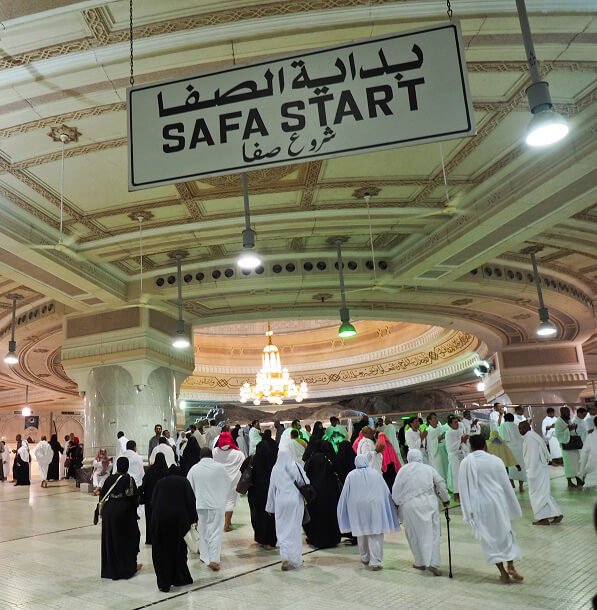
The two hills were originally outside the boundaries of the mosque. In the mid-1950s, Saudi authorities expanded Masjid al-Haram and formally enclosed Safa, Marwa, and the passage between them within the mosque complex. Today, that passage – known as the Mas’a – is a long, air-conditioned, multi-level gallery designed to move millions of pilgrims safely each year, with separate lanes for wheelchairs and pilgrims who need assistance.

The Story Behind Safa and Marwa

The Story Behind Safa and Marwa

The significance of Safa and Marwa goes back to Prophet Ibrahim (AS), his wife Hajar (RA), and their infant son Ismail (AS). By Allah’s command, Ibrahim brought Hajar and Ismail to the empty valley that would later become Makkah and left them there with limited provisions.

When the water ran out and baby Ismail grew weak from thirst, Hajar searched desperately for help. She climbed Safa first, scanning the horizon for any sign of a traveler or water. Seeing nothing, she moved toward Marwa, and repeated this back-and-forth search seven times, walking briskly through the valley between the two hills each time. On her final round, water sprang from the ground near Ismail’s feet – a miracle attributed to the angel Jibril (Gabriel) – and this spring became the Zamzam Well, which still flows today.

Hajar’s search became the template for one of Islam’s oldest continuous rituals. Centuries later, Prophet Muhammad (PBUH) performed Sa’i during his farewell pilgrimage, cementing it as an act every Muslim on Hajj or Umrah must repeat.

Safa and Marwa are named directly in the Quran, in Surah Al-Baqarah (2:158), where they are described as being among the symbols of Allah, and pilgrims are told there is no wrong in walking between them as part of Hajj or Umrah. This verse is part of why Sa’i is considered a rukn – an essential, non-negotiable pillar – of both pilgrimages rather than a recommended extra.

Why Sa’i Matters Spiritually

Where Tawaf (circling the Kaaba) centers on stillness, remembrance, and orbiting a fixed point, Sa’i is about movement, effort, and striving while trusting that the outcome is in Allah’s hands. Scholars and guides commonly describe it as a lesson in three parts: combine sincere effort with faith, never lose hope in difficulty, and trust that hardship is often followed by relief. Because Hajar was a woman acting alone under extreme pressure, many also point to Sa’i as a reminder of the dignity and spiritual standing given to her actions within Islamic tradition.

Distance, Layout, and What to Expect

Distance, Layout, and What to Expect
  • Distance between Safa and Marwa: approximately 450 meters one way.
  • Total distance for Sa’i: seven one-way trips, or about 3.15 kilometers (1.96 miles) in total.
  • Starting point: every lap must begin at Safa and finish at Marwa, then reverse. Starting a lap from Marwa invalidates it.
  • Lap counting: Safa to Marwa is lap one, Marwa back to Safa is lap two, and so on until the seventh lap ends at Marwa.
  • Green lights: a marked section along the route indicates the valley where Hajar walked briskly. Men are recommended to quicken their pace through this stretch; women continue at a normal walking pace throughout.
  • Facilities: the modern Mas’a is climate-controlled, multi-floor, and includes designated lanes for the elderly, pregnant women, and pilgrims using wheelchairs. Zamzam water is available along the route.
  • Purity: unlike Tawaf, ritual purity (wudu) is recommended for Sa’i but not a strict condition, which means pilgrims who cannot perform Tawaf for valid reasons can generally still complete Sa’i.

How to Perform Sa’i, Step by Step

  1. Complete Tawaf first. For Umrah, Sa’i is performed once, immediately after the seven circuits of Tawaf around the Kaaba.
  2. Approach Safa. Walk to the base of Safa and, if possible, face the direction of the Kaaba.
  3. Make an opening supplication. Pilgrims commonly recite a declaration affirming that Safa and Marwa are among the symbols of Allah before beginning, along with personal du’a.
  4. Walk toward Marwa. Move at a normal pace, reciting du’a or dhikr freely – there is no single fixed supplication required for the walk itself.
  5. Quicken your pace at the green lights (men only). This marks the stretch representing the valley where Hajar searched most urgently.
  6. Arrive at Marwa. Face the Kaaba’s direction again, make du’a, and this completes lap one.
  7. Repeat six more times, alternating direction each lap, until the seventh and final lap ends at Marwa.
  8. If in doubt about your count, assume the lower number of completed laps and continue from there to be safe.

For Hajj, Sa’i is performed either right after the Tawaf of arrival or after Tawaf al-Ifadah, and pilgrims may or may not still be in Ihram depending on which Tawaf they’ve completed.

Visiting Safa and Marwa Outside Peak Pilgrimage Season

You do not need to be performing Hajj or Umrah to walk through the Mas’a or see Safa and Marwa – the area is part of Masjid al-Haram and accessible whenever the mosque is open. If you’re combining a visit with other Ziyarat sites in Makkah, quieter periods outside Ramadan and the Hajj season generally mean shorter walking times and a calmer atmosphere, which is worth factoring into your itinerary if flexibility allows.

Getting to Masjid al-Haram: Practical Transport Advice

Most pilgrims begin their journey by landing at King Abdulaziz International Airport (JED) in Jeddah or Prince Mohammad Bin Abdulaziz Airport (MED) in Madinah, then travel onward to Makkah by road, since there is no public rail link direct to the Haram area from either airport for most travelers.

A few things worth planning ahead of your Sa’i and Tawaf:

  • Jeddah to Makkah: roughly 70–95 km depending on your hotel’s location, typically 60–90 minutes by car outside of peak Umrah season traffic, longer during Ramadan or Hajj.
  • Madinah to Makkah: around 420–450 km, generally a 4.5–6 hour private taxi journey, making it comfortable to schedule as a single day or overnight trip with rest stops.
  • Airport pickup: look for a service that offers meet-and-greet and flight tracking, so your driver adjusts automatically if your flight is delayed – especially valuable for tired pilgrims arriving with luggage and family members after a long flight.
  • Vehicle choice: a private sedan (such as a Toyota Camry) suits solo travelers or couples, while families or small groups often prefer a Hyundai Staria or Toyota Hiace, and larger groups benefit from a GMC Yukon or coaster bus.
  • Hotel proximity: hotels within walking distance of Masjid al-Haram reduce the need for repeated short taxi trips, but for hotels further out, arranging fixed-schedule transfers for Fajr or Isha prayers can save considerable time.
  • Peak season planning: during Ramadan and Hajj, book airport and intercity transfers in advance rather than relying on finding a taxi on arrival, as demand rises sharply and prices can fluctuate.

FAQs

What are Safa and Marwa?

Safa and Marwa are two small hills inside Masjid al-Haram in Makkah, connected by a covered walkway called the Mas’a, where pilgrims perform the ritual of Sa’i during Hajj and Umrah.

Why is walking between Safa and Marwa important?

It commemorates Hajar’s search for water for her infant son Ismail and is directly referenced in the Quran as being among the symbols of Allah, making Sa’i an obligatory pillar of both Hajj and Umrah.

How many times do pilgrims walk between Safa and Marwa?

Seven times, starting at Safa and ending at Marwa, alternating direction each lap.

What is the distance between Safa and Marwa?

About 450 meters one way, meaning the full seven-lap Sa’i covers roughly 3.15 kilometers (1.96 miles).

Is Sa’i obligatory for Umrah as well as Hajj?

Yes. Sa’i is a required pillar (rukn) for both Umrah and Hajj, and the pilgrimage is considered incomplete without it.

Do I need to be in a state of purity (wudu) to perform Sa’i?

Wudu is recommended but not strictly required for Sa’i, unlike Tawaf, which makes it accessible to pilgrims who cannot perform Tawaf for valid reasons at that time.

What are the green lights during Sa’i for?

They mark the section of the walkway representing the valley where Hajar walked most urgently. Men are encouraged to walk briskly through this section; women maintain a normal pace throughout.

Can I perform Sa’i using a wheelchair?

Yes. The modern Mas’a includes dedicated lanes and multiple floors designed for wheelchairs, elderly pilgrims, and anyone needing assistance.

What happens if I lose count of my laps?

Take the lower number you believe you’ve completed and continue from there, to ensure the full ritual is valid.

Is Safa and Marwa open to visit outside Hajj and Umrah?

Yes, since they sit within Masjid al-Haram, visitors can see the Mas’a whenever the mosque is accessible, though most people experience it while performing Sa’i itself.

How far is Jeddah Airport from Makkah?

Roughly 70–95 km depending on the exact hotel location, usually a 60–90 minute private taxi ride outside of peak congestion periods.

How long does it take to travel from Madinah to Makkah by taxi?

Around 4.5 to 6 hours by private car, covering approximately 420–450 km, making it practical to plan as a single comfortable journey.

What vehicle should I choose for a family Umrah trip?

Families typically do well with a Hyundai Staria or Toyota Hiace for comfort and luggage space, while larger groups may prefer a GMC Yukon or a coaster bus.

Should I book airport transfers in advance during Ramadan or Hajj?

Yes. Demand for taxis rises sharply during these peak seasons, so pre-booking a private transfer with flight tracking and meet-and-greet service is strongly recommended.

What other Ziyarat sites are near Safa and Marwa in Makkah?

Since Safa and Marwa are inside Masjid al-Haram, they’re a natural starting point before visiting other nearby Makkah Ziyarat sites such as Jabal al-Nour (Cave of Hira) and Jabal Thawr, both of which are commonly included in a Makkah Ziyarat taxi itinerary.

Final Thoughts

Safa and Marwa carry a weight that goes far beyond their modest size as two rocky hills. Every step of Sa’i retraces a mother’s desperate search for water and her unwavering trust that Allah would provide – a story so significant that it was written into the Quran and made obligatory for every pilgrim who comes after. Whether this is your first Umrah or your tenth Hajj, understanding what you’re walking through, and why, tends to make the ritual land differently once you’re actually there.

If you’re planning your journey to Makkah, Jeddah to Makkah Taxi offers private airport transfers, Umrah taxi services, and Ziyarat transportation with licensed drivers who know these routes well – so the logistics stay simple and your focus stays on the pilgrimage itself.

Similar Posts

Leave a Reply

Your email address will not be published. Required fields are marked *